Weekend Edition · Sat 17 Oct 2026
Hormuz Shipping Remains Far Below Pre-Conflict Levels, UKMTO Says
The UK Maritime Trade Operations centre counted 254 transits through the Strait of Hormuz in the seven days to 14 October, about 70% below pre-conflict levels, and logged 12 attacks on merchant ships. Most of those transits cannot be seen on ship-tracking data, and UKMTO says most attacked vessels no longer report to it, so the true picture of traffic and danger is less certain than the headline numbers suggest.
Not investment advice: this article is for information only.
Chanan Zevin - Chief Editor and Head of Desks
Published
Seventy percent below normal
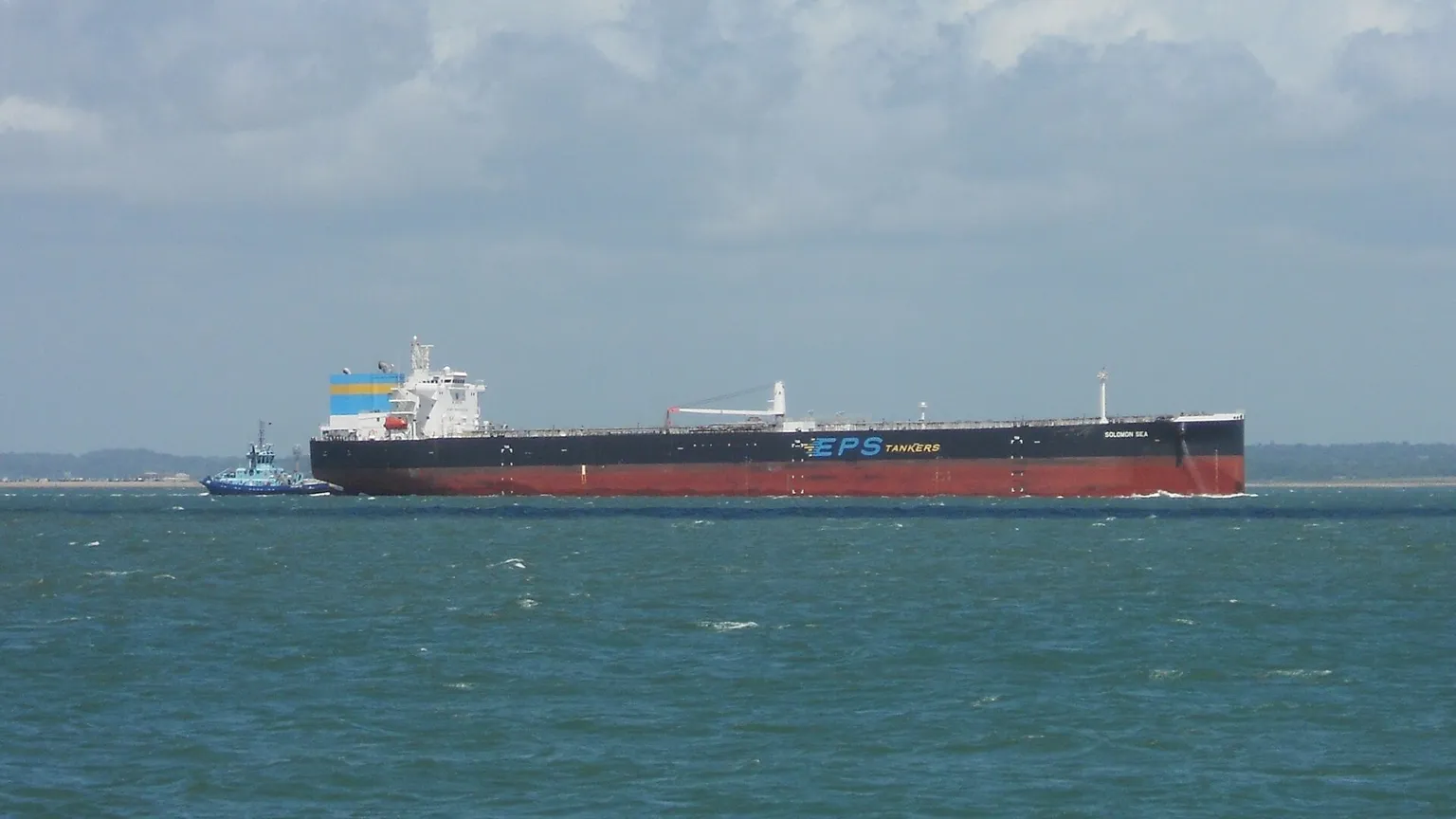
Shipping through the Strait of Hormuz remains about 70% below its level before the conflict that began on 28 February, according to the weekly overview UKMTO published on Friday 16 October. The centre counted 125 outbound and 129 inbound transits in the seven days to 14 October, a total of 254. That compared with 129 outbound and 146 inbound the previous week, a total of 275. The weekly count therefore fell by 21 transits, or about 8%. Anadolu Agency and the maritime news site gCaptain reported the same figures on Friday.
Two datasets in one number
The total combines two very different sources. Only 42 of the 254 transits were observed through the Automatic Identification System, the ship-tracking signal that commercial vessels broadcast, down from 60 the previous week. The remaining 212 came from US-stated facilitated transits supplied by the US Naval Cooperation and Guidance for Shipping organisation. UKMTO says those US figures, which include ships not broadcasting their position, cannot be independently verified. It describes the two series as related but distinct datasets.
A short weekly series
Comparable weekly totals are available from UKMTO's published bulletins. The bulletin produced on 25 September, covering 17 to 23 September, counted 129 transits in each direction, or 258 in total. The bulletin of 9 October, covering the week to 7 October, counted 275, and the latest counted 254. Chart 1 shows those three weeks of combined transits, with each bar labelled by its observation window rather than its publication date. Traffic has moved within a narrow band and shows no recovery trend.
What 'pre-conflict' means
UKMTO does not print the size of its pre-conflict baseline in these bulletins. Its 25 September overview said combined weekly traffic in each direction stood at 29% of the pre-conflict average, which is consistent with the latest description of about 70% below. By the Journal's arithmetic, that ratio implies a baseline of roughly 440 to 450 transits a week in each direction. That figure is an inference, not a published UKMTO number. UKMTO's own wording has also shifted, from about 90% below in mid-September to about 75% below in early October.
Twelve attacks in a week
UKMTO recorded 12 attacks on vessels during the latest reporting week, up from 11 the week before. Ten were in the Strait of Hormuz, one in the Arabian Gulf and one in the Gulf of Oman. Six of the ships continued their voyages or reached port, two were disabled or not under command, three had unconfirmed damage or outcomes, and one was lost. Anadolu reported that a container ship struck by an unidentified projectile near Ras Shaykh Masud on 13 October caught fire and sank the next day, with all crew evacuated. gCaptain identified it as the Singapore-flagged GFS Pride.
Attacks go unreported
The incident count is probably too low. UKMTO wrote that it is struggling to report the true number of attacks because the majority of vessels attacked refuse to report to it. It added that it knows of other incidents through other sources but cannot include them without verification. Anadolu reported that UKMTO has recorded 84 incidents in the Strait since the conflict began. Readers should treat every published attack total as a floor rather than a complete count.
| Window | Inbound | Outbound | AIS-observed | Attacks |
|---|---|---|---|---|
| 17-23 Sep | 129 | 129 | 44 | n/a |
| 1-7 Oct | 146 | 129 | 60 | 11 |
| 8-14 Oct | 129 | 125 | 42 | 12 |
The southern route is riskier
Where ships go matters. UKMTO said 55 of the 74 projectile strikes it has recorded since 6 July were on the southern route through the strait. The latest Joint Maritime Information Center advisory, published on 15 October, describes a northern route controlled by Iran and a southern corridor near Oman, according to gCaptain. That advisory warned that ships operating with tracking switched on face higher risk of being targeted or told to divert toward the Iranian route. UKMTO said most ships that do broadcast their position are using the Iranian route.
Competing accounts of control
The United States and Iran describe the waterway very differently. "Let me be clear: the Strait of Hormuz is controlled by the United States and our regional partners, not Iran. And it remains open for business," Admiral Brad Cooper, head of US Central Command, said in a video statement on Friday, gCaptain reported. Cooper said about 400 merchant ships had transited in the preceding seven days, without specifying the dates. Iranian army chief Major General Amir Hatami said on Thursday that the strait would stay closed until the rights of the Iranian people were respected, gCaptain reported.
Why the counts differ
The gap between 400 and 254 does not necessarily mean one side is wrong. The figures may cover different periods, and they may define a transit differently. UKMTO counts a full transit as a numbered vessel moving between the Arabian Gulf and the Gulf of Oman within a 24-hour reporting window. Cooper's figure was not accompanied by a method. Until both are published on the same basis, the Journal treats the UKMTO count as the more transparent of the two.
Mostly energy cargoes
The ships that do move are mostly carrying energy. UKMTO cited US Joint Maritime Information Center reporting that 80% of transits through the strait remain energy carriers. Cooper said US forces helped Gulf partners move more than 100 million barrels of crude in the seven days, and more than 1.3 billion barrels in recent months. The Journal could not verify those volumes. Vessel counts and barrels are different measures, and neither alone shows how much supply has reached buyers.
Oil prices climbed
Prices moved sharply higher during the week. The December Brent futures contract settled at $109.86 a barrel on Friday, up $3.94 on the day, according to Newsquawk and the AP. It had settled at $104.72 on 9 October, according to Yahoo Finance data, a weekly gain of 4.9% by the Journal's calculation. US crude futures rose 10.4% over the same period to $101.41. Chart 2 shows Brent's daily settlements across the week, and the AP noted that Brent stood at about $72 in late February.
Physical barrels cost more
The futures price understates the strain in physical markets. The Energy Information Administration's Europe Brent spot price, published on FRED, was $126.55 a barrel on 14 October, while the front-month futures contract settled at $106.06 that day. That gap of about $20 suggests buyers are paying a large premium for cargoes available now. Kpler analysts wrote on Thursday that intensified Iranian attacks drove Gulf crude flows sharply lower, CNBC reported. ING strategists said the market was pricing in a significant risk premium, according to the AP.
Policy responses
Governments are trying to ease the pressure. The International Energy Agency agreed on Thursday to release more than 20 million barrels of diesel, CNBC reported, and European diesel refining margins fell nearly 2% on Friday to $78.67 a barrel. A US official said the administration was considering lifting sanctions on some shadow-fleet tankers to reduce record freight rates, according to CNBC. Those steps address products and shipping costs. They do not reopen the strait.
Claims still unverified
Some reported incidents remain unconfirmed. Iran's Revolutionary Guard Navy said an oil supertanker carrying more than 2 million barrels of crude struck a naval mine in the strait, causing an explosion and fire, according to Anadolu. The Journal found no independent confirmation of that claim at the time of writing. UKMTO's bulletin does not list it among the week's attacks. Its reporting window ended on 14 October, which may explain the difference.
Limits of the numbers
Three cautions apply to every figure in this report. Vessel counts do not measure cargo volumes, because a small product tanker and a supertanker each count as one transit. Attack counts depend on voluntary reporting, which UKMTO says has broken down. And most of the traffic total rests on US figures that the reporting agency itself cannot check. The direction of the data is clear, but the precise levels carry wide uncertainty.
What to watch
The next UKMTO weekly overview is due on 23 October. The key questions are whether the share of traffic visible on tracking data keeps falling, whether attacks continue at about a dozen a week, and whether the spot premium over futures narrows. UKMTO also reported that transits through the Bab el-Mandeb remain 22% below their level before the Houthi blockade announcement of 22 July. Both chokepoints matter for energy flows to Europe and Asia. For now, the data point to constrained traffic rather than a recovery.
Sources
- Primary: UKMTO Voluntary Reporting Area Weekly Overview No. 11 (produced 16 Oct 2026) and editions of 9 Oct and 25 Sep 2026 (ukmto.org PDFs, fetched 17 Oct); EIA Europe Brent spot via FRED (DCOILBRENTEU, to 14 Oct); ICE Brent and NYMEX WTI futures via Yahoo Finance.
- Reporting: Anadolu Agency morning briefing and Hormuz report (16-17 Oct 2026); gCaptain (Mike Schuler, 16 Oct); AP via BNN Bloomberg (16 Oct); CNBC (16 Oct); Newsquawk crude wrap (16 Oct).
- Official statements (attributed, not verified): US CENTCOM Adm. Brad Cooper video statement (16 Oct) and Iranian army chief Maj. Gen. Amir Hatami (15 Oct), both via gCaptain; IRGC Navy mine claim via Anadolu.