Edition · Mon 02 Nov 2026
Stocks Desk
Wall Street's October Bruise Meets Apple Week: Asia Steadies After an AI Wobble
Asian markets rebounded on Monday as South Korea climbed 2.6% and Chinese blue chips gained 1.3%, with investors awaiting Apple results following October's steep tech selloff.
Not investment advice: this article is for information only.
By Rachel · Edited by Chanan Zevin - Chief Editor and Head of Desks
Published
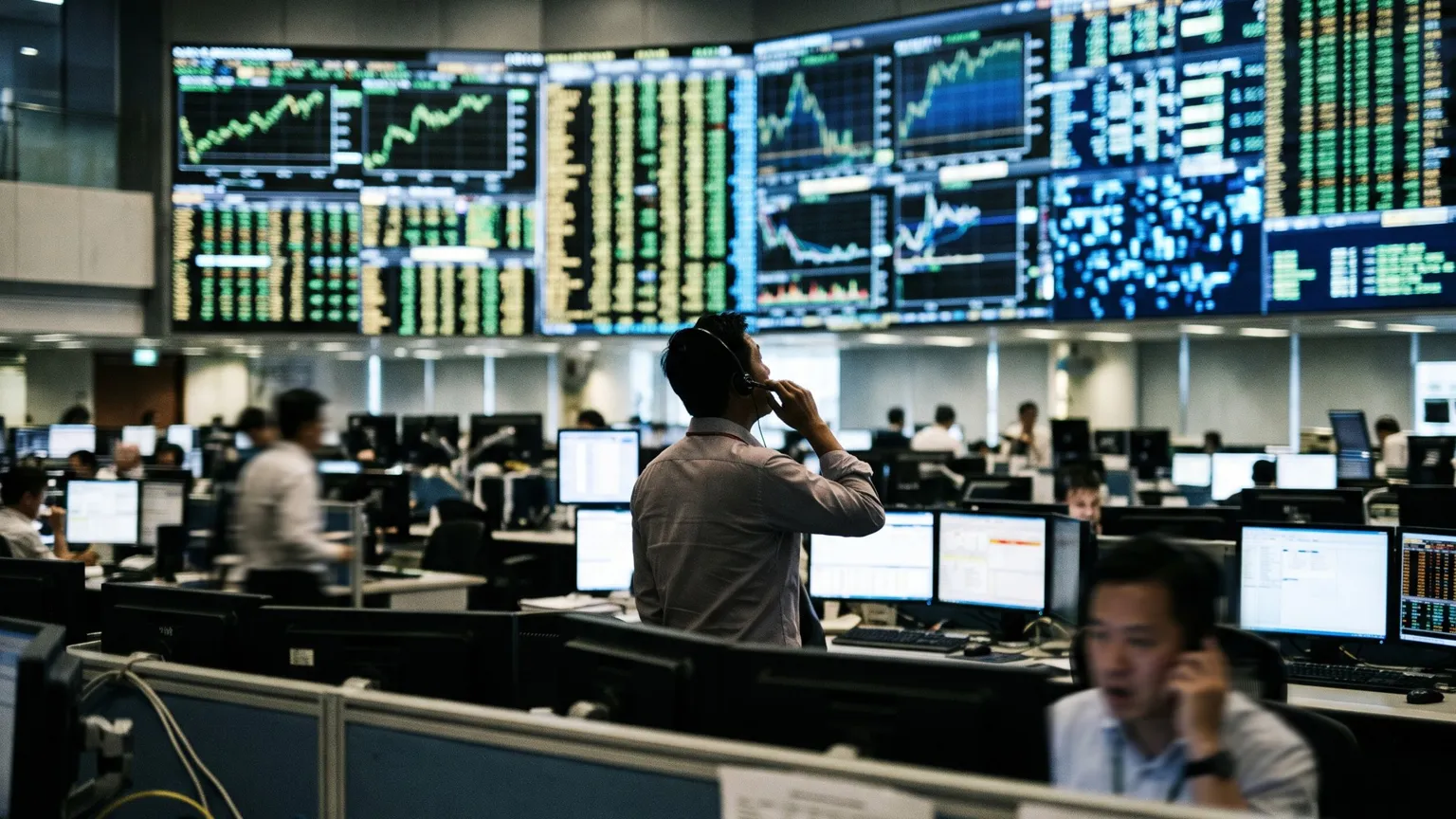
Regional bourses turn positive after tech slump
Asian share markets rebounded on Monday, Nov 2, as equity investors looked to upcoming corporate earnings from Apple to alleviate worries surrounding heavy artificial intelligence capital spending. The turnaround followed a bruising previous month for technology shares, during which the Nasdaq lost almost 7% in October, marking its worst monthly performance since April 2025.
Regional bourses turn positive after tech slump
In regional trading, South Korea's benchmark added 2.6% after shedding 16% in October, while Japan's Nikkei firmed 0.3%. China's blue chips gained 1.3% following media reports that domestic regulators planned to meet financial institutions to discuss support measures for capital markets, while MSCI's broadest index of Asia-Pacific shares outside Japan rose 0.5%. In United States index futures, S&P 500 futures edged up 0.5% and Nasdaq futures rallied 0.9%.

Capital expenditure debates shadow Apple earnings
Why it matters: The rebound tests whether consumer device demand and corporate tech resilience can offset the drag of surging infrastructure outlays and elevated borrowing costs. With default insurance costs blowing out after aggressive data centre commitments and chipmaker stumbles, equity valuations remain highly sensitive to whether cash generation can keep pace with slowing corporate earnings acceleration.
Capital expenditure debates shadow Apple earnings
Apple unseated Nvidia as the world's most valuable listed company after its shares climbed for four consecutive months. The company avoided spending billions on data centres, and analysts projected quarterly earnings per share of $2 on revenue of $113 billion, compared with $1.85 per share in the year-earlier quarter. However, broader technology sentiment remained fragile after Intel posted a tumble of near 29% on Friday, while prior earnings disappointments from Alphabet and Amazon had already triggered sharp declines across the artificial intelligence sector.
Capital expenditure debates shadow Apple earnings
Analysts at Goldman Sachs forecast that capital expenditures across hyperscalers will almost double to $800 billion this year before expanding to $1.2 trillion in 2027. Goldman Sachs US equity strategist Ben Snider noted that while third-quarter results confirm continued spending on artificial intelligence, the growth rate of that capex is peaking, while S&P 500 earnings growth of nearly 30% in 2026 is forecast to slow to 18% next year. Political shifts could compound these hurdles, noting that potential Democratic gains in Tuesday's US midterm elections could bring increased regulatory scrutiny and resistance to data centre expansion.
Treasury yields steady as oil drops and central banks loom
Sovereign bond markets stabilized following October's equity retreat, with ten-year US Treasury yields holding at 4.931%, down from an October peak of 5.3645%, while two-year yields stood at 4.612%. Interest rate futures indicated a 72% chance of a quarter-point Federal Reserve rate rise in December, with cumulative priced-in tightening dropping to 55 basis points from more than 70 basis points a month prior, though That markets priced about a 75% probability of a December move. Central bank activity will accelerate this week, with investors anticipating policy tightening from the Reserve Bank of Australia, Sweden's Riksbank, and the Bank of England.
Treasury yields steady as oil drops and central banks loom
Energy markets provided additional relief on Monday as Brent crude futures declined 3.3% to $109.70 a barrel and US crude dropped 3.4% to $100.58 a barrel. The drop in crude prices came after mediation discussions involving Iranian and Qatari officials, following a 13.6% surge in Brent during October as Gulf tanker attacks persisted. Meanwhile, gold rebounded 0.9% to $3,911 an ounce after sliding 6.8% in October, amid reports that stressed investors had sold bullion to meet margin calls during last week's equity selloff.