Edition · Mon 02 Nov 2026
Commodities Desk
Oil Gives Up 3% as Qatar-Led Talks Raise Hopes of an End to the Iran War
Oil fell more than 1% on Monday as Qatari-led talks to end the Iran war advanced, while OPEC+ kept its December output targets steady.
Not investment advice: this article is for information only.
By Rachel · Edited by Chanan Zevin - Chief Editor and Head of Desks
Published

Crude benchmarks retreat as Qatari diplomacy advances
Oil gave up 3%, falling more than 1% on Monday, Nov 02 2026, after Iranian and Qatari officials held a third straight day of talks aimed at pushing for a deal to end the US-Israeli war on Iran. Brent crude futures fell $1.59, or 1.40%, to $111.84 a barrel by 0011 GMT, while US West Texas Intermediate crude stood at $102.56 a barrel, down $1.56, or 1.50%.
Crude benchmarks retreat as Qatari diplomacy advances
The drop followed substantial gains late last month, as Brent crude ended October at its highest level in six months amid growing market concerns that the conflict between the United States and Iran could escalate further following Tuesday's US midterm elections.
Crude benchmarks retreat as Qatari diplomacy advances
Tim Waterer, chief market analyst at KCM Trade, described the retreat as a technical pullback following strong gains recorded the previous week. Waterer explained that lingering hopes of some form of diplomatic progress, combined with the absence of any meaningful military escalation over the weekend, succeeded in taking immediate heat out of prices for now.
Price projections remain tethered to conflict risks
Even with Monday's decline, market analysts cautioned that crude trading remains vulnerable to political shifts surrounding the US midterm elections. Waterer noted that the market remained alert to the possibility that rhetoric around Iran could be ratcheted higher and push Brent crude prices toward $120 a barrel after Tuesday's vote.
Price projections remain tethered to conflict risks
Broader projections highlighted the continuing impact of regional conflict on energy pricing, with Mirae Asset Sharekhan forecasting that the US-Iran war may keep crude oil in a broad price range between $105 and $120 a barrel.
Price projections remain tethered to conflict risks
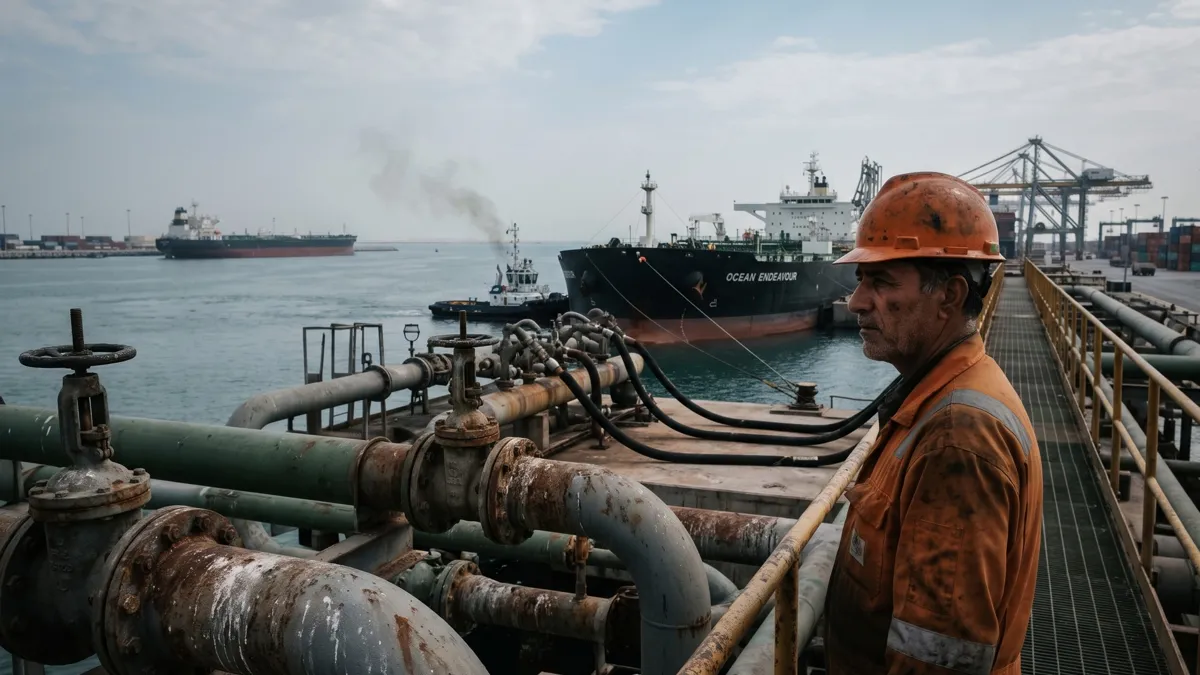
This diplomatic shift matters for global markets because strikes against commercial oil tankers transiting the Strait of Hormuz have driven up global energy and shipping costs. Rising fuel expenses have heightened international inflation concerns and influenced expectations for central bank interest-rate decisions, meaning any breakthrough negotiated through Qatari mediation could reduce maritime security premiums and ease inflationary pressures across financial markets.
Tehran balances dialogue with military posture
Tehran underscored that engagement would not compromise its strategic preparedness. Iranian Foreign Minister Abbas Araqchi stated on Sunday that the purpose of the ongoing and progressing talks was to continue consultations with Qatari mediators, emphasizing that Tehran is prepared for both defence and diplomacy.
Tehran balances dialogue with military posture
Diplomatic dialogue took place against a backdrop of continuing regional security risks, as attacks against oil tankers moving through the Strait of Hormuz maintained upward pressure on international energy costs and maritime transit fees.
OPEC+ keeps December output steady amid supply tensions
Supply management also remained rigid amid geopolitical disruption, as the producer group OPEC+, which includes Russia, kept December production targets steady on Sunday. The decision confirmed market expectations that policy adjustments will not occur until next year, as the alliance continues to struggle with supply and transit disruptions resulting from the Iran war.
OPEC+ keeps December output steady amid supply tensions
Despite regional hostilities, some Middle Eastern producers maintained volume. Two of three ship-tracking companies reported that Saudi Arabia increased crude supplies in October compared to September, even as Iran-aligned Yemeni Houthis launched attacks targeting Saudi energy infrastructure.