Weekend Edition · Sat 17 Oct 2026
Israel's Coalition Math Stalls as Poll Finds Majority Preference for Unity Over Another Election
A Maariv poll by Lazar Research, conducted on 14 and 15 October among 700 adults, shows Prime Minister Benjamin Netanyahu's bloc and the Jewish opposition tied at 51 seats each, short of the 61 needed to govern. In the same survey, 55% of respondents said they would prefer a unity government to another election if the 27 October vote is inconclusive.
Chanan Zevin - Chief Editor and Head of Desks
Published
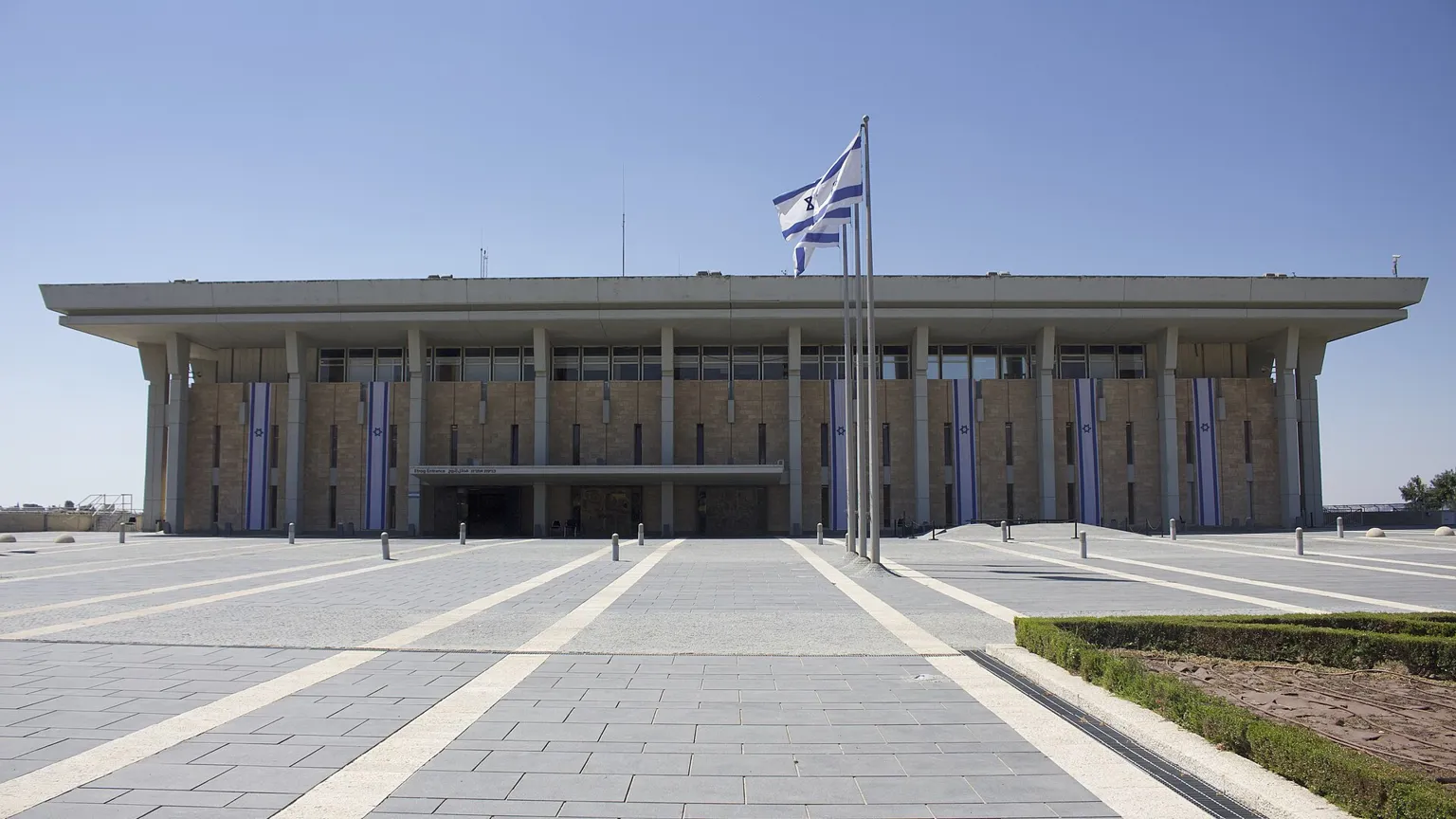
A tie at 51
Israel's two main political blocs are tied 11 days before the 27 October election, according to a poll published by the Maariv newspaper on Friday 16 October. The survey, conducted by Lazar Research in cooperation with the Panel4All online panel, projects 51 seats for Netanyahu's coalition bloc and 51 for the Jewish opposition parties. A government needs the support of at least 61 members of the 120-seat Knesset. Neither bloc reaches that number in this poll. The findings were reported by The Jerusalem Post and Anadolu Agency on the same day.
Unity preferred to a re-run
The poll also asked what voters want if the election produces no clear result. Fifty-five percent said they would prefer a unity government, 27% said they would prefer another election, and 18% were unsure. That is a majority preference among respondents, not a forecast of what the parties will do. Israel has held repeated elections in recent years when coalition talks failed. The question measures public appetite, not the willingness of party leaders to share power.
Conditions differ by camp
Support for unity comes with conditions. Among opposition voters, 54% said they would support a unity government only if it were led by a leader from their own bloc, The Jerusalem Post reported. Coalition voters were more divided. Anadolu reported that 36% of them backed a unity government led by Netanyahu, while The Jerusalem Post put the figure at nearly 40%. Both outlets said 32% of coalition voters would prefer another election in the event of a deadlock.
How the seats divide
The poll's seat projection splits the Knesset into four groups. The coalition bloc and the Jewish opposition each have 51 seats, Arab parties have 14, and the Reservists-Economic Party has four and is not counted in either bloc. Chart 1 shows the four groups against the 61-seat majority threshold. The Arab parties' total of 14 is the highest combined figure for them in this series, The Jerusalem Post said. Both main camps have said they reject relying on Arab parties to form a government, according to Anadolu.
Inside the coalition bloc
Netanyahu's Likud fell two seats to 18, according to The Jerusalem Post. Itamar Ben-Gvir's Otzma Yehudit and United Torah Judaism each have eight seats, Shas has seven and Bezalel Smotrich's Religious Zionist Party has six. Ofer Winter's People of Israel party crossed the electoral threshold with four seats. That entry offset most of Likud's loss, so the bloc as a whole fell only one seat, the paper said. Likud is no longer the largest party in this poll.
Inside the opposition
Gadi Eisenkot's Yashar is the largest party, with 21 seats. Naftali Bennett's Together list, known in Hebrew as B'Yachad, has 13. Yair Golan's Democrats have nine and Avigdor Liberman's Yisrael Beytenu has eight, down one, according to The Jerusalem Post. Those four parties make up the opposition's 51 seats. The opposition therefore depends heavily on one new party, while the coalition is spread across six lists.
Arab parties and the swing list
The Joint List, led by Yousef Jabareen, is projected at eight seats and Mansour Abbas's Ra'am at six, Anadolu reported. The Reservists-Economic Party, led by Yoaz Hendel and Yaron Zelekha, crossed the threshold with four seats. The poll did not say which camp it would support. The Jerusalem Post noted that even if its four seats were added to either bloc, neither would reach 61. Adding them gives 55, still six short of a majority.
| Party (leader) | Bloc | Seats |
|---|---|---|
| Yashar (Eisenkot) | Opposition | 21 |
| Likud (Netanyahu) | Coalition | 18 |
| Together / B'Yachad (Bennett) | Opposition | 13 |
| Democrats (Golan) | Opposition | 9 |
| Yisrael Beytenu (Liberman) | Opposition | 8 |
| Otzma Yehudit (Ben-Gvir) | Coalition | 8 |
| United Torah Judaism | Coalition | 8 |
| Joint List (Jabareen) | Arab parties | 8 |
| Shas | Coalition | 7 |
| Religious Zionist Party (Smotrich) | Coalition | 6 |
| Ra'am (Abbas) | Arab parties | 6 |
| People of Israel (Winter) | Coalition | 4 |
| Reservists-Economic (Hendel, Zelekha) | Unaligned | 4 |
Why the math stalls
In the Journal's analysis, this poll leaves only three arithmetic routes to a government. One bloc could win over parties from the other side, one could rely on Arab parties, or the two camps could form some kind of unity arrangement. Both blocs have ruled out the second route, and the first requires defections that no party has announced. That leaves the unity option that a majority of respondents say they prefer, or another election. One poll cannot predict which path leaders will choose.
Who should be prime minister
Respondents were also asked to compare leaders head to head. Eisenkot led Netanyahu by 48% to 41% as the more suitable prime minister, The Jerusalem Post reported. Netanyahu and Bennett were tied at 43% each, and Netanyahu led Liberman by 43% to 37%. Israelis do not elect the prime minister directly. The post goes to the politician who can assemble a majority in the Knesset, which makes these figures a measure of standing rather than of power.
Optimism on both sides
Most voters expect their side to win. Seventy-nine percent of respondents said they were optimistic that the bloc they planned to vote for would win, and 21% were pessimistic. Among coalition voters, 90% were optimistic, compared with 75% of opposition voters. Maariv's own headline on the survey said the less optimistic camp was more determined to turn out. Turnout intentions, not just preferences, will decide whether the projected tie holds.
How the poll was done
The fieldwork took place on 14 and 15 October. The sample consisted of 700 respondents described as representative of Israel's adult population aged 18 and over, including both Jews and Arabs. Maariv gave a margin of error of 3.7 percentage points, according to Anadolu. The share of undecided voters was 5.2%. Blue and White, with 1.1%, the Haredi Public and Noam, each with 0.5%, and Tzomet with 0.2% fell below the threshold.
Reading the margin of error
The margin of error applies to percentages, not directly to seats. Each Knesset seat represents a little under 1% of valid votes, so a sampling error of 3.7 points on a large party could translate into several seats either way. Parties projected at four seats sit close to the 3.25% electoral threshold, where a small shift in support can remove an entire list. Online panel surveys may also under-represent groups that are harder to reach. A projected tie is well within normal polling error.
Polls are not results
This survey is a snapshot of stated intentions two weeks before voting. Seat projections depend on assumptions about turnout and about which small parties pass the threshold. Different polling firms often publish different seat counts in the same week. The Journal has relied on one poll for this report and did not compare it with other surveys. Readers should treat the 51-51 split as one estimate, not a settled balance.
Against the previous survey
Thestateofisrael.com, a site that tracks published Israeli polls, compares Friday's figures with a Lazar Research survey dated 13 October. By its count, People of Israel gained four seats and Ra'am one, while Likud lost two and Yashar, the Democrats and Yisrael Beytenu lost one each. That comparison implies Yashar stood at 22 seats and Likud at 20 three days earlier. The Jerusalem Post's account of the week's changes differs in detail, for example on United Torah Judaism. Both sources agree that Likud fell two seats.
What the coverage does not show
Some details that would help readers judge the poll are not in the published reports. Neither outlet printed the exact wording of the unity question or said whether respondents were offered specific unity arrangements. The reports also do not say how the seat projection allocates undecided voters or how the sample was weighted. Those choices can move results by a seat or more. The Journal has not seen the full questionnaire.
A changing field
The movement in this poll came mainly from small parties. People of Israel's entry and the Reservists' crossing of the threshold reshaped both blocs, while Likud's two-seat drop was the largest change among the big parties. The Jerusalem Post described the Arab parties as each gaining one seat in the week. Comparisons with earlier polls vary depending on which survey is used as the baseline, so the Journal reports only the changes stated in the published coverage. The overall picture of deadlock is consistent across both outlets.
What to watch
Voting takes place on Tuesday 27 October. Overseas voting by state representatives has begun, as the Journal reported on 16 October. Further polls are expected before the final weekend, and shifts among threshold parties will matter most. After the vote, the president consults party leaders and chooses the candidate most likely to form a government. If no one can reach 61, the choice between unity talks and another election will move from pollsters to party leaders.
Sources
- Poll: Maariv / Lazar Research (Dr. Menachem Lazar) with Panel4All, fieldwork 14-15 Oct 2026, n=700, published 16 Oct 2026; Maariv Hebrew coverage (headline on turnout determination).
- Reporting: The Jerusalem Post (Moshe Cohen, 16 Oct 2026, article 911902); Anadolu Agency (Abdul Raouf Arnaout and Mohammad Sio, 16 Oct 2026) and Anadolu morning briefing (17 Oct).
- Context: thestateofisrael.com poll aggregator (Lazar/Panel4All series, 16 Oct 2026); Zevin Intelligence Journal, overseas voting report (16 Oct 2026).