Monday Edition · Mon 19 Oct 2026
Eight Days Before Israel's General Election, Polls Show Netanyahu's Bloc Slipping and Neither Side Near a Majority
Recent television polls put Prime Minister Benjamin Netanyahu's bloc at about 51 seats, short of the 61 needed to govern, with the opposition led by Gadi Eisenkot level or slightly ahead. A new party led by Yoaz Hendel and Yaron Zelekha is now forecast to cross the threshold, and Arab-led lists could hold the balance in the 27 October vote.
Chanan Zevin - Chief Editor and Head of Desks
Published
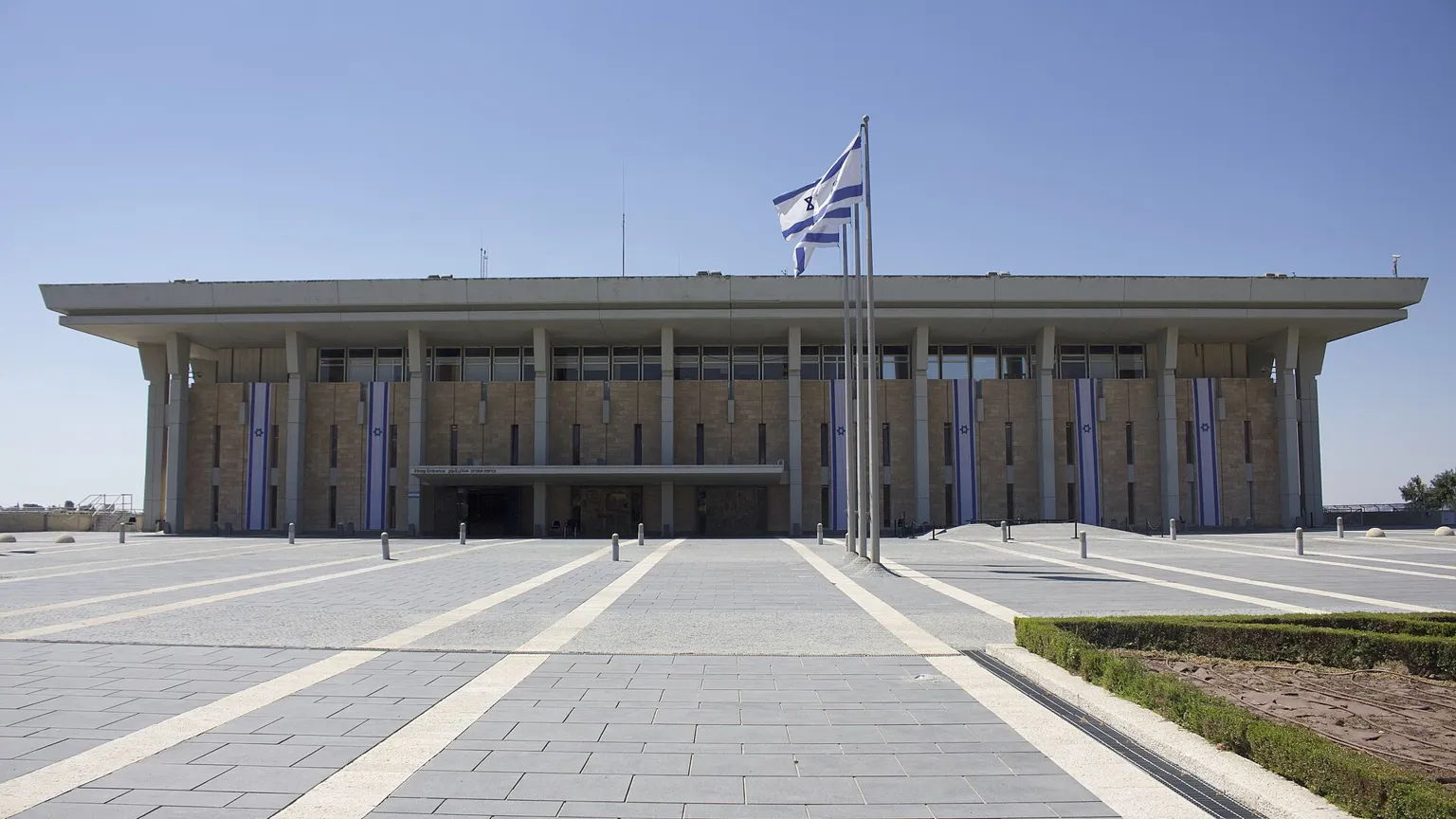
The race eight days out
Israel holds a general election on Tuesday, 27 October, to choose the 120 members of the Knesset. Eight days before the vote, published polls show neither the bloc led by Prime Minister Benjamin Netanyahu nor the opposition bloc led by former military chief Gadi Eisenkot reaching the 61 seats needed for a majority. The election is a full national vote, not a parliamentary confidence motion. Coalition talks after the vote will decide who forms the next government.
The Channel 13 poll
Channel 13's weekly poll, published on 14 to 15 October, showed Netanyahu's bloc falling by four seats to 51, against 50 for the Eisenkot-led opposition, The Times of Israel reported. Parties aligned with neither bloc, namely the predominantly Arab Joint List, the Islamist party Ra'am and the Hendel-Zelekha alliance, took the remaining 19 seats. The survey by pollsters Shmuel Rosner and Noah Slepkov of Madad included 1,018 respondents with a margin of error of 3.1%. Chart 1 shows the projected seats by bloc.
Party by party
In that poll, Eisenkot's Yashar party was the largest with 20 seats, followed by Netanyahu's Likud at 18, The Times of Israel reported. B'Yachad had 12, Yisrael Beytenu 9, the Democrats 9, the Joint List 9, Otzma Yehudit 8, United Torah Judaism 8, Shas 7, Religious Zionism 6, Ra'am 6, People of Israel 4 and Hendel-Zelekha 4. The order matters because the largest party's leader is often, though not always, the first asked to try to form a government.
The KAN poll on Sunday
A poll by the public broadcaster KAN on Sunday, 18 October, put Eisenkot's bloc at 52 seats and Netanyahu's at 51, according to KAN News and the poll aggregator Israel 2026. Hendel-Zelekha again received four seats in that survey. The aggregator said polls published on 18 October gave the coalition a range of 51 to 61 seats, depending on the pollster. That spread shows how uncertain the outcome remains.
A new party crosses the threshold
The Hendel-Zelekha alliance is the race's newest factor. Former minister Yoaz Hendel and economist Yaron Zelekha announced their joint run on 6 September, The Times of Israel reported. The party is not aligned with either bloc. Israel's electoral threshold is 3.25% of valid votes, which translates into four seats. A party just above the threshold can win four seats. One just below it wins none, and its votes are lost.
Why the unaligned seats matter
With both blocs short of 61, the parties outside them become decisive. In the Channel 13 poll, the Joint List and Ra'am together held 15 seats and Hendel-Zelekha four. Arab-led parties have not usually joined Israeli governments, although Ra'am sat in the coalition formed in 2021. Whether either bloc can draw on Arab-led parties, directly or through outside support, may determine whether a government can be formed at all.
Correcting an earlier description
The headline brief for this edition noted that a Saturday item had described the 27 October event as a Knesset vote. The Journal's Saturday politics article described it as an election, and no published Journal article used the phrase "Knesset vote" in that sense. For clarity, the event is a general election for all 120 seats. A clarification note has been added to the Saturday politics article.
Trump's endorsement
US President Donald Trump has endorsed Netanyahu, saying the Israeli prime minister is the only candidate who will not leave Washington alone in its fight against Iran, The Times of Israel reported. Netanyahu urged voters to heed the president's words. Eisenkot and former prime minister Naftali Bennett responded that only Israeli voters will decide. Analysts quoted by the newspaper questioned whether a foreign endorsement will move undecided voters.
Netanyahu's security message
Netanyahu used a pre-election security briefing to vow to topple the Iranian regime and to outline a new offensive doctrine, The Times of Israel reported. It was his first such briefing since the Hamas attack of 7 October 2023. The opposition called the doctrine "hollow". Security has dominated Netanyahu's campaign, while the opposition has emphasised accountability for the 2023 failures and the cost of living.
Pressure within the right
The right-wing bloc faces internal strains. Former chief rabbi Yitzhak Yosef, a religious leader of Shas, urged followers not to vote for Itamar Ben Gvir's Otzma Yehudit, The Times of Israel reported. Ben Gvir said Netanyahu had promised the European Union to exclude him from the next government, according to the newspaper. These disputes could shift votes between parties within the bloc and could push a small party below the threshold.
The budget and the economy
The economy is a central campaign issue. On Sunday the cabinet approved NIS 2.6 billion in across-the-board ministry budget cuts to fund defence, The Times of Israel reported. The decision highlights the trade-off between military spending and civilian services that voters face. The headline brief cited a KAN finding that about 30% of voters are undecided and that the economy is the top concern for 34%. The Journal could not verify those figures in KAN's published poll at the time of writing, so they are not relied on here.
Arab voters and turnout
Turnout among Arab citizens could affect the result. The Times of Israel reported that Israel's Arab minority sees the election as existential. Likud and Bezalel Smotrich's party said they would place 2,000 activists at Arab polling stations on election day, the newspaper reported, a move critics described as intimidation. Higher Arab turnout would strengthen the Joint List and Ra'am and make it harder for the Netanyahu bloc to reach 61.
Election integrity disputes
Disputes over the conduct of the vote have also surfaced. A former Likud campaign technology chief said in a sworn affidavit to the High Court that the party's new app could be used to monitor polling stations in breach of the law, The Times of Israel reported. Likud has not been found to have broken any law, and the claims are allegations in a court filing. The case adds to concerns about the use of technology in the campaign, including AI-generated content.
Voting abroad
Israeli diplomatic staff abroad have already voted, with turnout 17 percentage points higher than in 2022, The Times of Israel reported. That group is small and not representative of the electorate. Soldiers will vote in special polling stations. Most Israelis will vote on 27 October at polling stations across the country, and the official results will be published by the Central Elections Committee in the days after.
Polls are not results
Israeli polls have a mixed record. Each seat represents a little under 1% of valid votes, so a small sampling error can move several seats. Parties near the threshold are especially hard to measure. Polls in recent elections have sometimes misjudged the final result by several seats for individual parties. The polls show a close race in which neither bloc has a clear path to 61. They cannot show who will form the next government.
What happens after the vote
After the results are certified, President Isaac Herzog will consult the parties and assign a candidate the task of forming a government. The candidate will have up to 28 days, with a possible extension of 14 days. If no one succeeds, the mandate can pass to another candidate or the Knesset. If the deadlock persists, Israel could face another election, an outcome a Maariv poll last week found most voters wanted to avoid.
The unity option
One way out of a deadlock is a broad government that crosses bloc lines. A Maariv poll by Lazar Research, conducted on 14 and 15 October, found that 55% of respondents would prefer a unity government to another election if the vote is inconclusive, as the Journal reported on Saturday. Among opposition voters, many said they would support such a government only if led by someone from their own bloc. That condition is likely to dominate any post-election negotiations if neither side reaches 61.
What to watch
Three things will matter in the final week. The first is whether Hendel-Zelekha and other small parties stay above the threshold in the last polls, which must be published by the Friday before the vote. The second is Arab turnout. The third is whether security events involving Iran shift the campaign's focus in the final days.
Journalistic Scoop
A party at exactly four seats is the most fragile number in Israeli politics. Both the Channel 13 and KAN polls give the Hendel-Zelekha alliance four seats, which is the minimum a party can win under the 3.25% threshold. In the Channel 13 poll, People of Israel also stood at four. A party polling at four seats sits within the margin of error of winning none.
That makes the threshold, rather than the headline bloc totals, the most important variable for the result. If one four-seat party in the Netanyahu bloc falls below the line, its votes are wasted and the bloc loses ground. If Hendel-Zelekha falls short, the unaligned group shrinks and the main blocs gain relative weight. A handful of votes around 3.25% may decide which bloc can approach 61.
Sources: The Times of Israel · Israel 2026
Sources
- The Times of Israel, Netanyahu bloc drops 4 seats in weekly TV poll as another unaligned party forecast to enter Knesset, 15 Oct 2026 · timesofisrael.com
- KAN News, KAN poll: Eisenkot bloc 52, coalition 51, 18 Oct 2026 · kan.org.il
- Israel 2026, Israel election polls Oct. 18 · israel2026.co.il
- The Jerusalem Post, Blocs struggle to reach Knesset majority in polls · jpost.com
- Al Jazeera, The kingmakers that could determine Israel's election, 19 Oct 2026 · aljazeera.com