Edition · Tue 03 Nov 2026
Politics Desk
Screens Go Dark in Prague as Czech Public Broadcasters Strike Over Their Future
Czech public television and radio employees staged a one-day strike on Tuesday to resist government funding cuts and a proposed transition to state budget financing.
By Rachel · Edited by Chanan Zevin - Chief Editor and Head of Desks
Published
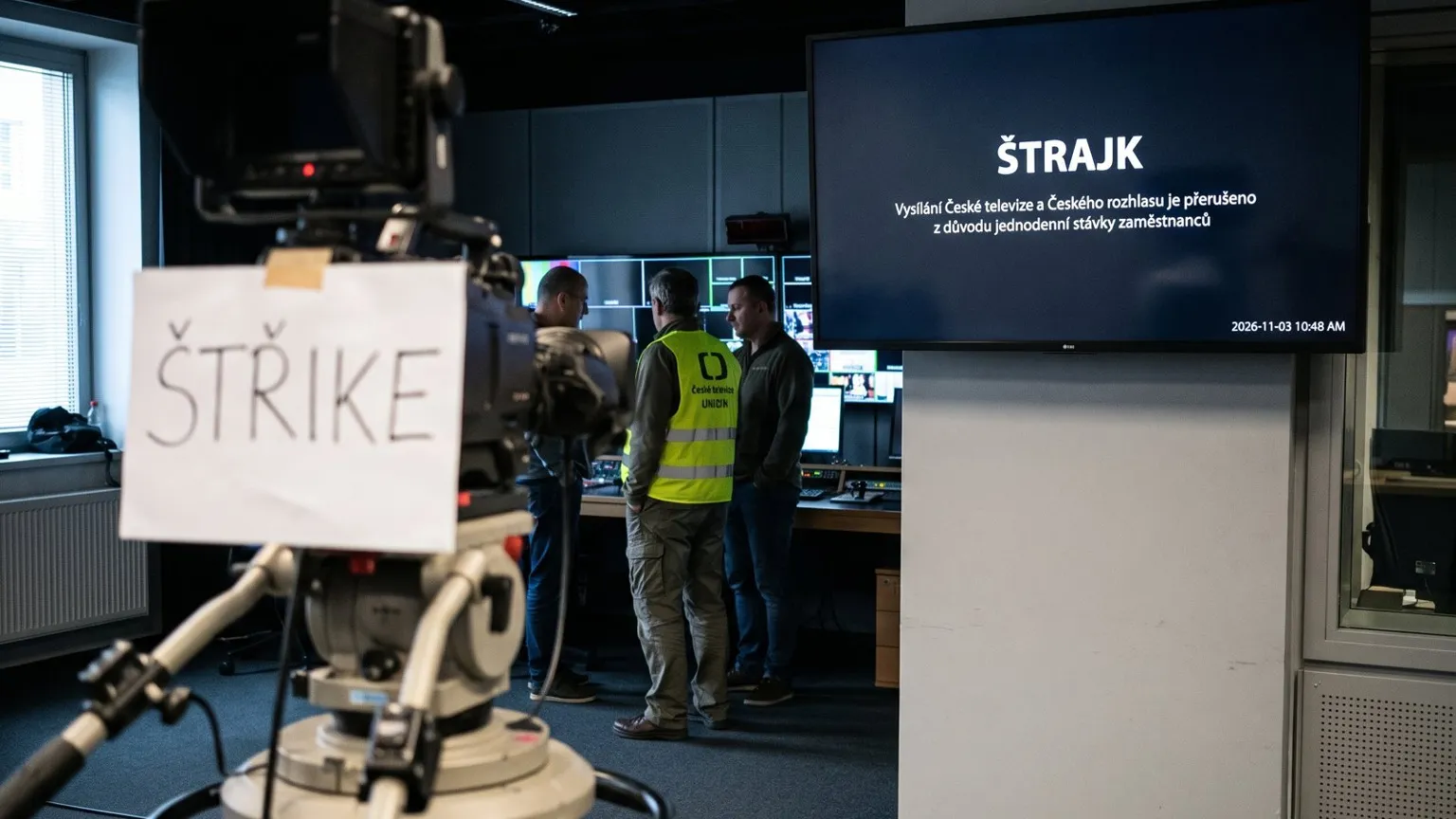
Darkened studios and curtailed programming across the capital
Czech public television and radio staff initiated a one-day strike on Tuesday, Nov 3, to protest a government plan to reduce their funding and transfer their financing mechanism into the state budget. The walkout triggered immediate broadcast curbs across networks, while artists and students organized public demonstrations in Prague for Tuesday afternoon.
Darkened studios and curtailed programming across the capital
Viewers watching Czech Television saw unusual disruptions as the network's 24-hour news broadcast originated from a darkened newsroom. Anchors appeared on screen dressed in black attire and departed from standard presentation routines by reading their reports directly from written scripts.
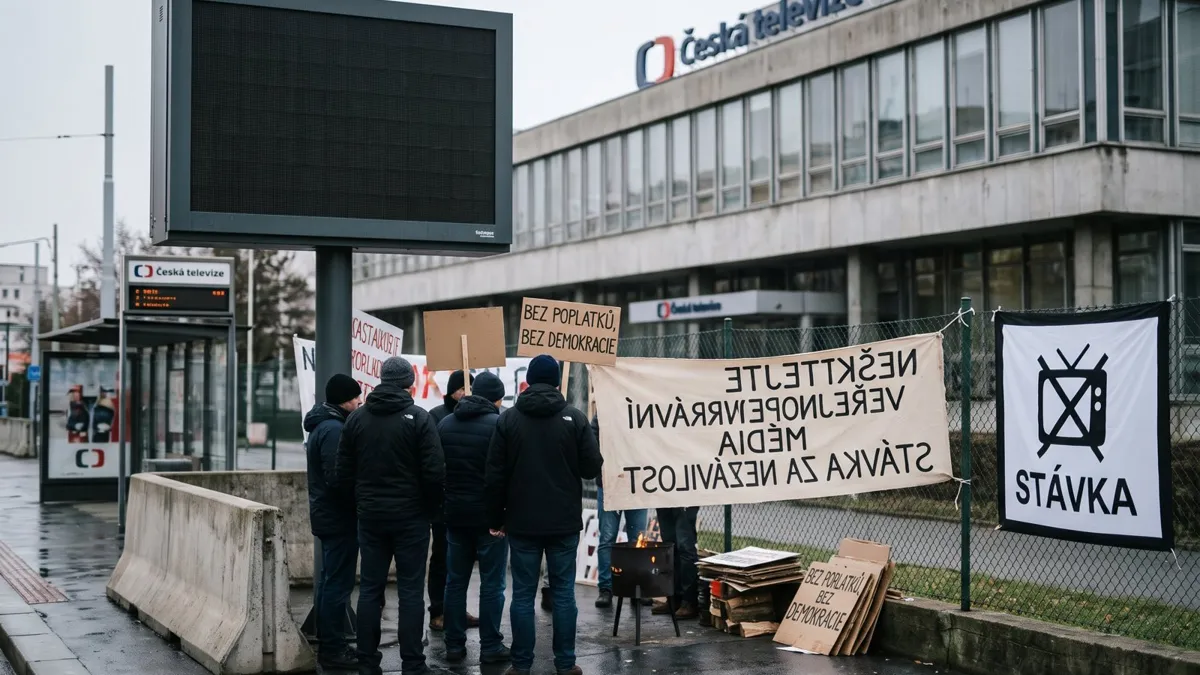
Darkened studios and curtailed programming across the capital
The confrontation matters directly to the public because public media serve as primary information pillars in democratic life. Removing independent financing structures can alter news coverage and redefine the boundaries between elected politicians and state-funded reporting, directly influencing the credibility of information received by ordinary households.
Scrapping household fees and slicing budgets by 15%
At the heart of the dispute is an overhaul advanced by the populist government of Prime Minister Andrej Babis, a billionaire whose administration is backed by the far-right SPD and eurosceptic Motorists parties. The governing coalition intends to eliminate the 205-crown ($9.43) monthly household broadcasting fee that currently finances programming.
Scrapping household fees and slicing budgets by 15%
The legislative package also introduces a 15% financing cut to public media organizations. Media administrators warned that such reductions would roll Czech Television's nominal budget back to its 2008 level and push Czech Radio's budget down to where it stood in 2005, a contraction the broadcasters described as unbearable.
Warnings of political leverage and Hungarian-style pressure
Opposition lawmakers and staff members argued that ending direct viewer payments dismantles an essential buffer between reporters and politicians. Opposition parties drew parallels between the coalition's initiative and changes enacted in Hungary under former Prime Minister Viktor Orban, a Babis ally who established a broad network of pro-government media.
Warnings of political leverage and Hungarian-style pressure
Jan Molacek, a Czech Television reporter serving on the strike committee, said that the measure would hand governing politicians direct leverage over editorial output. The draft legislation was introduced abruptly on a Friday last month, after which coalition lawmakers restricted debate and pushed through a preliminary vote before dawn on a Saturday.
Babis defends financial relief as parliament faces debate
Prime Minister Babis rejected allegations that the government wanted to muzzle the press, maintaining on Monday that the legislative package was aimed solely at fulfilling an election commitment to reduce living expenses for households. Babis stated that there was no fight over democracy and that nobody intended to take over public media or bring them under state control.
Babis defends financial relief as parliament faces debate
The legislation passed its preliminary vote last month and now moves to further debate in parliament, where Babis indicated adjustments could still occur. Molacek noted that while altering the funding system remained a possibility, any new model required comprehensive discussion and robust legal protections to prevent political meddling, especially for newsrooms that a 2025 Reuters Institute survey identified as among the most followed and most trusted in the country.