Edition · Wed 28 Oct 2026
Geo-politics Desk
Washington Tells the Gulf to Brace for a Short, Hard Iran Campaign After the Midterms
The United States has warned Gulf nations to prepare for a short, intense military campaign against Iran after the midterm elections, as military assets move into place and diplomatic talks stall.
Chanan Zevin - Chief Editor and Head of Desks
Published
Pentagon readies strike options for post-election window
The United States informed several Gulf Arab nations that they should prepare for a short, intense military campaign against Iran following the Nov. 3 midterm elections, on Oct. 28, 2026, citing people briefed on the discussions. While President Donald Trump has stated he will not strike Iran prior to the midterms, people familiar with his thinking said he is leaning toward a substantial post-election assault targeting Iranian infrastructure and nuclear sites.
Pentagon readies strike options for post-election window
United States forces could initiate major operations against Iran within 96 hours of receiving an order from Trump, though officials noted that no final decision has been made. The White House stated that it would not comment on sensitive military plans that may or may not exist, adding that the president keeps all options on the table to ensure Iran never acquires a nuclear weapon.
Pentagon readies strike options for post-election window
A renewed campaign threatens to trigger immediate regional retaliation against commercial energy infrastructure and maritime passages across the Persian Gulf, raising the risk of prolonged disruption to regional shipping lanes and allied air travel. With regional defenses already under strain and Iran assembling replacement ballistic hardware, any escalation beyond economic containment risks pulling surrounding states into direct kinetic conflict.
Reinforcements reposition across regional airspace and waters
In preparation for potential escalation, the United States military is transferring a Patriot system from Texas to bolster regional missile defenses and has evacuated personnel from exposed bases, according to officials familiar with the movements. American forces in the region have restocked munitions while bomber aircraft and fighter jets prepare for potential missions.
Reinforcements reposition across regional airspace and waters
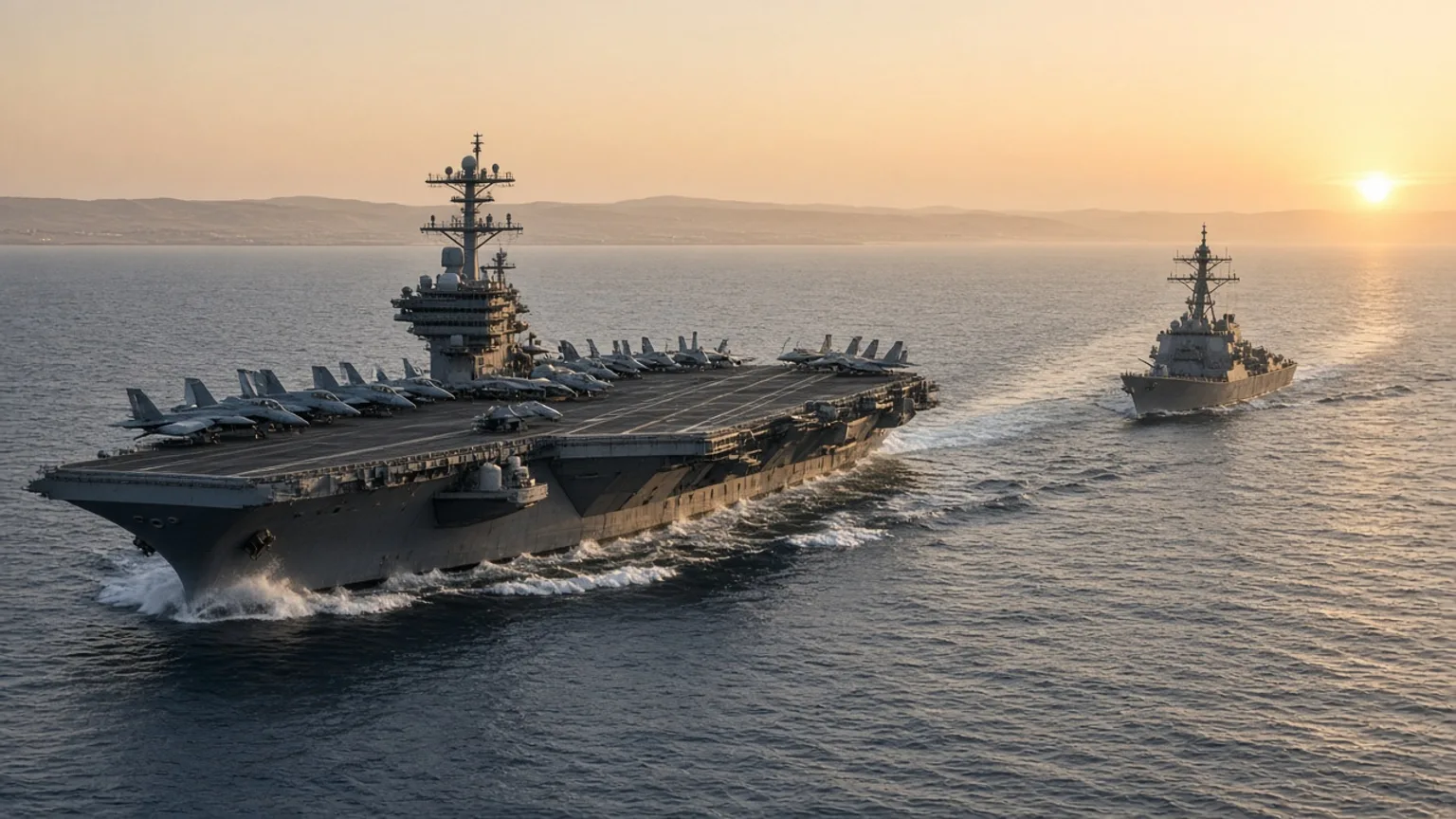
An additional aircraft carrier strike group and Marine expeditionary unit are positioned to link up next month with an armada of roughly 20 other warships operating in the Middle East. Meanwhile, the United States Central Command stated that American forces and regional partners maintain control of the international waterway in the Strait of Hormuz, refuting assertions by Iran's Islamic Revolutionary Guard Corps Navy commander that American forces had abandoned the passage.
Reinforcements reposition across regional airspace and waters
Diplomatic missions have already initiated precautions, and United States embassies ordered departures and the State Department instructed non-emergency personnel to vacate Saudi Arabia effective Oct. 23. Regional civil aviation has faced continuing fallout, and UAE departing seat capacity rose 23% to 7.2 million between June and October, even as carriers including Etihad, Emirates, and flydubai cancelled flights to Saudi destinations like Riyadh, Dammam, and Jeddah through early November.
Nuclear inspections stall as regional mediation stumbles
Tighter sanctions and a naval blockade have cut off Iranian oil sales for months and shut down much of the country's air links. Despite Iran weathering more than 20,000 strikes during earlier phases of conflict, Rafael Grossi, head of the International Atomic Energy Agency, told the United Nations Security Council on Tuesday that the agency has not identified repair or reconstruction work at damaged sites, though inspectors remain barred from verifying whether nuclear material has been diverted.
Nuclear inspections stall as regional mediation stumbles
Concurrently, regional diplomatic tracks have struggled to secure durable guarantees. Pakistan army chief Asim Munir presented a proposal approved by Trump to Tehran under which Pakistan, Turkey, Saudi Arabia, and Qatar would serve as guarantors. However, Iranian officials and commentators remain divided over terms, and Tehran has demanded Washington fulfill seven conditions before agreeing to direct discussions, even as Saudi air defenses destroyed five Houthi ballistic missiles and four drones launched toward the kingdom.