Edition · Thu 05 Nov 2026
Technology Desk
The Ballot Box Turns on the Data Center: Voters Deliver a Blow to the AI Buildout
In dozens of places across the country, voters passed bans or restrictions on the giant facilities that power artificial intelligence, and elected candidates who promised to regulate the industry. Wall Street noticed.
By Rachel · Edited by Chanan Zevin - Chief Editor and Head of Desks
Published
A backlash at the polls
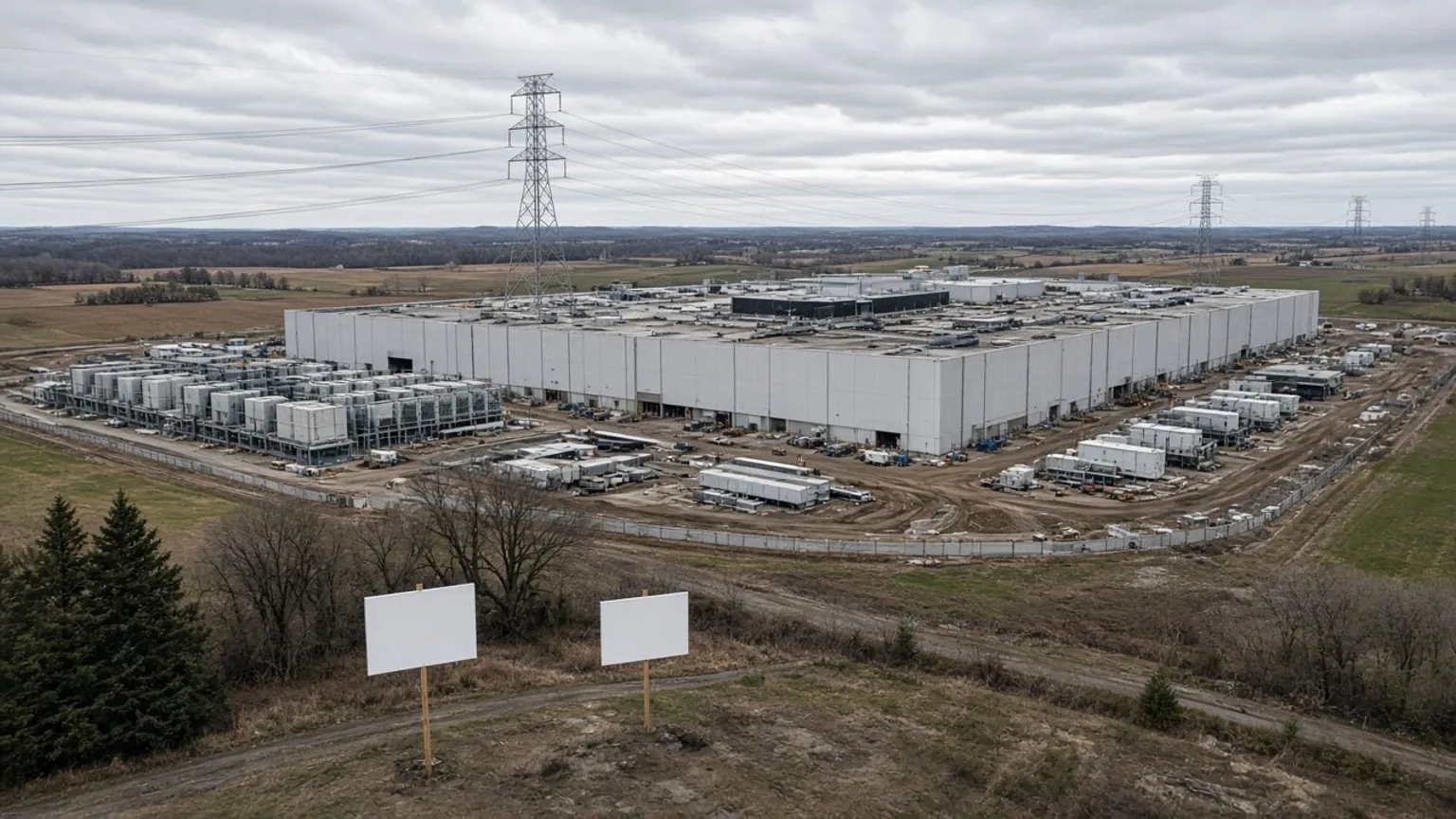
For two years, the artificial intelligence industry has raced to build ever-larger data centers with little resistance from Washington. On Tuesday, voters pushed back. In at least 38 jurisdictions across the country, they passed bans or restrictions on data centers, reflecting widespread public anger at the facilities and adding to growing opposition to the industry's ambitions.
A backlash at the polls
After two years of little AI oversight, voters not only rejected data center projects but also elected Democratic candidates who had promised to regulate the technology. Critics have long complained about the facilities' noise and their heavy demands for power and water.

Candidates who ran against the buildout
Data centers became a campaign issue in races far beyond local ballot measures. In Ohio, Amy Acton, the Democrat who defeated Vivek Ramaswamy for governor, proposed a moratorium on data centers unless they cover their own utility costs. In Florida, the Republican winner, Byron Donalds, also campaigned on regulating the facilities.
Candidates who ran against the buildout
In Texas, where Democrats won the governorship and a Senate seat, analysts are asking whether the new leaders will bring moratoriums or restrictions that could slow construction in one of the industry's most important states.
Wall Street reacts
Investors took notice. While most stocks rallied on Wednesday, shares tied to the data center buildout fell. Nvidia lost 3 percent, and an exchange-traded fund that tracks AI infrastructure stocks dropped 9 percent. CoreWeave and Nebius, two cloud companies that rent out computing power, fell about 10 percent and 6.7 percent.
Wall Street reacts
Elon Musk's companies, which have made Texas their home, also slipped: Tesla fell about 3.3 percent and SpaceX about 3.9 percent, as Democratic victories in the state's governor and Senate races raised questions about his relationship with its new leaders. Mr. Musk had spent more than $200 million trying to keep the Texas Senate seat Republican.
Wall Street reacts
"While a blue wave could spark volatility in certain sectors, such as tech and AI, given growing public opposition to the buildout of data centers, we believe markets can grind higher regardless of the outcome," Justin Buell, chief investment officer at Continuity Group, wrote in a note. On Thursday, the selling spread to Asia, where chipmakers SK Hynix and Samsung Electronics fell sharply in Seoul.
What comes next
Tech executives and investors were already preparing for a Democratic sweep and its consequences for data centers, cryptocurrency and other industries. The Times described what lies ahead for the industry as an era of scrutiny, with new Democratic majorities in Congress and in statehouses that campaigned on reining it in.
What comes next
The local votes may matter even more. Data centers need land, power and water, and approvals usually come from county boards and city councils. If Tuesday's results are a guide, the industry's biggest obstacle may no longer be chips or capital, but the neighbours.