Monday Edition · Mon 19 Oct 2026
Stock Futures Rebound After the Chip Rout, but This Week's Earnings Will Decide the AI Trade
Nasdaq 100 futures rose about 1.3% and S&P 500 futures about 0.8% early on Monday as oil and Treasury yields eased. The bounce follows the Nasdaq's worst week since late June, and results from Netflix, Tesla, Meta and IBM now decide whether the selloff in AI stocks is over.
Not investment advice: this article is for information only.
Chanan Zevin - Chief Editor and Head of Desks
Published
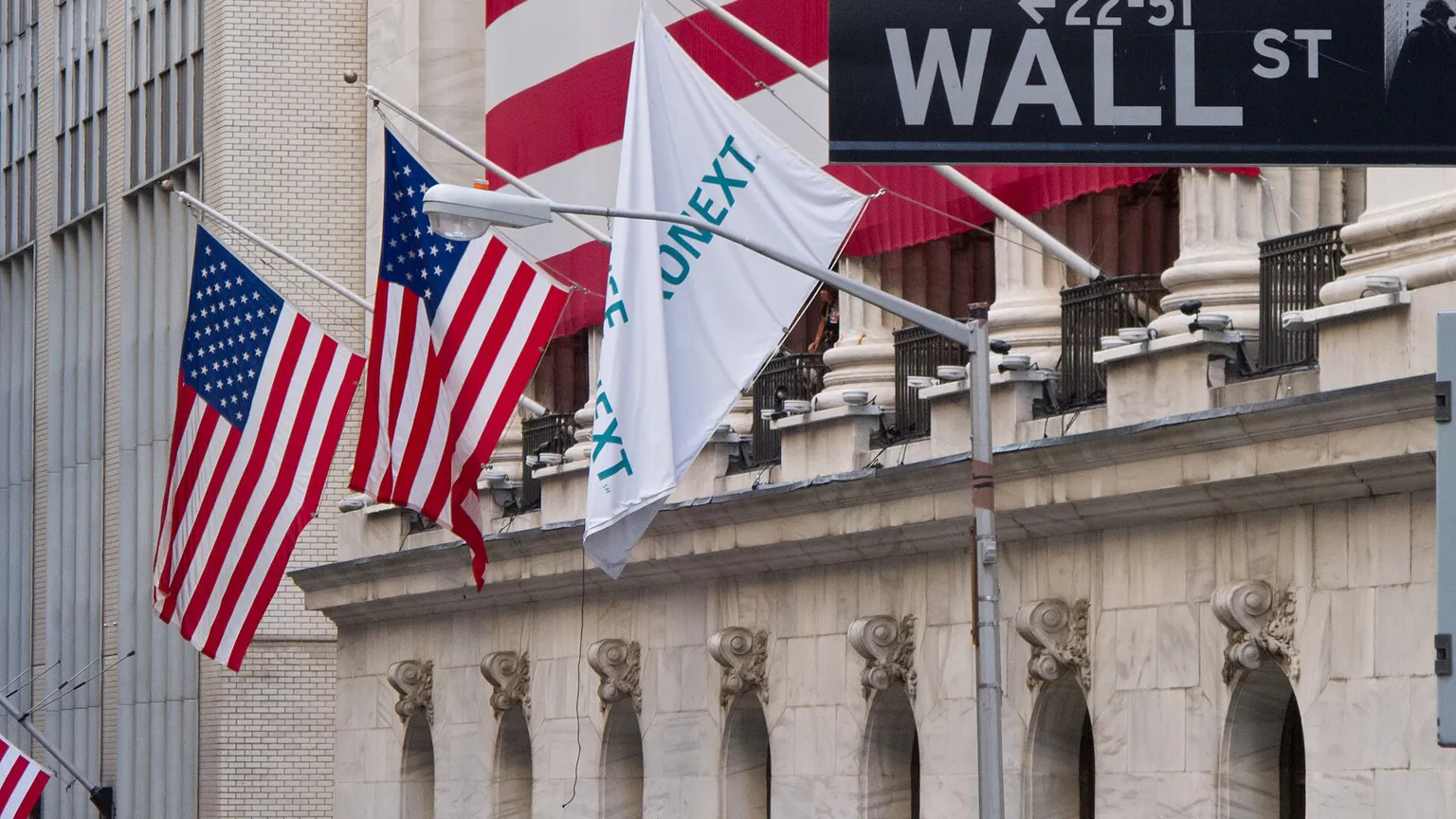
A relief bid in early trading
US stock futures climbed on Monday, 19 October, after one of the most turbulent weeks of the year for technology shares. Futures on the Nasdaq 100 were up more than 1.3% and futures on the S&P 500 were up about 0.8% in early European hours, according to a morning note from the broker XTB published at 08:27 Central European time. Later in the morning Reuters reported a smaller gain, with Nasdaq 100 E-minis up 1.05% and S&P 500 E-minis up 0.47% at 7:05 a.m. New York time, while Dow futures were slightly lower. A futures move before the opening bell is an indication, not a closing price.
What last week did to the indexes
The rebound starts from a deep hole. On Friday, 16 October, the Nasdaq Composite fell 2.1%, the S&P 500 fell 1% and the Dow Jones Industrial Average slipped 0.4%, Yahoo Finance reported. Over the full week the Nasdaq lost 4.5%, ending a month of gains with its worst week since late June. The S&P 500 fell 1.95% for the week. The Dow rose 0.7% as investors rotated out of technology and into other sectors. Chart 1 shows the weekly moves of the three benchmarks.
A chip index on a historic losing run
Semiconductors were at the centre of the selling. The PHLX Semiconductor Index, known as the SOX, posted its longest losing streak since 2008, Investing.com reported on 17 October. Other trackers date the comparison to 2006, so the precise record depends on the data series used. XTB described the streak as the longest for the iShares semiconductor fund since 2008. Either way, the run of declines was unusual in length for a sector that had led the market for most of the year.
Volatility jumped as well
Fear gauges moved sharply. XTB said last week brought the largest jump in the VIX volatility index since June. The VIX measures the price of options that protect against falls in the S&P 500, so a spike signals that investors were paying more for insurance. The firm also noted that the share of Nasdaq 100 companies trading above their 50-day moving average had fallen, a sign that the weakness had spread beyond a handful of megacaps.
Why investors sold AI stocks
The reasons offered for the selloff focus on financing rather than demand. Reuters said concerns that higher interest rates could curb investment in AI infrastructure weighed on technology stocks, particularly data-centre operators. The agency described mounting unease over how the costly AI buildout will be financed. CoreWeave, a cloud provider backed by Nvidia, plunged more than 25% last week, according to Reuters. Yahoo Finance said the company came under pressure over its debt-heavy balance sheet.
A new model added to the doubts
A second worry concerned the amount of computing power that AI will need. XTB pointed to a new model from DeepSeek, which revived concerns that AI development may require less computing power than the market assumes. That would mean weaker demand for chips. The note said the concern triggered a brief selloff in Asian chipmakers, but most of those losses had been recovered by Monday morning.
Oil and yields gave some relief
Lower energy prices and bond yields supported Monday's move. Brent crude futures were down 1.3% at about $108.5 a barrel, Reuters reported, after President Donald Trump's decision to waive some sanctions on Russia. Brent had touched $110 a barrel on Friday for the first time since May, according to Yahoo Finance, as Iran escalated attacks in the Strait of Hormuz. The benchmark 10-year Treasury yield fell to about 5.08%, Reuters said. Lower yields reduce the discount applied to future earnings, which matters most for growth stocks.
Which shares led the premarket
The bounce was strongest among last week's biggest losers. CoreWeave rose 3.4% in premarket trading, while Broadcom gained 2.9% and Micron 3.3%, Reuters reported. Megacaps were mixed. Nvidia and Amazon rose more than 1% each, while Apple and Meta were marginally lower. A rebound concentrated in the most heavily sold shares is consistent with short covering, though that cannot be confirmed from price data alone.
The earnings calendar this week
The real test comes from company results. Netflix reports on Tuesday, according to XTB and Reuters. Tesla, Meta and IBM are scheduled for Wednesday. Reuters said SpaceX is due to report on Tuesday, and that General Motors and GE Aerospace also report this week. Lam Research and Texas Instruments, two chip-industry companies, are also scheduled for this week, according to market previews. The exact dates should be checked against company announcements before trading on them.
What the results need to show
Investors want evidence that heavy spending on AI is producing profits. XTB called the week "the first real test of investor confidence in the AI play after recent turbulence". The broker said the market will look to the large cloud companies for confirmation of whether giant capital expenditures are beginning to translate into profits. Reuters said Meta was expected to beat Wall Street expectations on Wednesday. Expectations are not results, and a beat on earnings can still disappoint if spending guidance rises faster than revenue.
Dead-cat bounce or completed repricing
Two readings of Monday's move are possible. In the first, last week's selloff priced in financing risk, and solid earnings allow a recovery. In the second, a one-day bounce in futures is a pause within a longer decline, a pattern traders call a dead-cat bounce. The breadth data cited by XTB and the length of the chip losing streak support caution. The fact that most of the Asian chip losses were recovered supports the first view. Neither view can be confirmed before the results arrive.
The year so far still looks strong
The weekly loss should be kept in proportion. As of Friday's close, the Dow was up 8.2% in 2026, the S&P 500 was up 11.9% and the Nasdaq was up 12.5%, Yahoo Finance reported. The US bull market recently marked its fourth anniversary, Reuters noted. A 4.5% weekly drop in the Nasdaq is significant, but it leaves the index well above where it started the year. For long-term holders, the question is less about one bad week and more about whether the earnings that justified this year's gains are still arriving on schedule.
Signals from outside the US
Other markets gave a mixed picture early on Monday. Japan's Nikkei 225 was down 0.8%, South Korea's Kospi was up about 0.2%, and the Shanghai Composite was stable after better-than-expected Chinese growth data, XTB said. Euro Stoxx 50 futures were down 0.3% following weekend protests in France. These moves suggest that the rebound was led by US technology rather than by a broad global shift in risk appetite.
How rates feed into AI valuations
The link between bond yields and AI shares runs through financing costs. Building data centres requires large upfront spending on chips, power and buildings, and much of it is funded with debt or with equity raised on the promise of future profits. When the 10-year Treasury yield sits above 5%, as it has in recent weeks, both kinds of funding become more expensive. Reuters linked last week's selling directly to concerns that higher rates could curb investment in AI infrastructure. That is why a small fall in yields on Monday was enough to lift the most rate-sensitive shares.
Energy shares took the other side
The rotation out of technology had a clear beneficiary. Energy stocks outperformed technology by more than four percentage points during Friday's session, according to the market tracker FinScans. Higher oil prices, driven by attacks in the Strait of Hormuz, lifted producers while lowering expectations for the wider economy. Reuters data showed pipeline operators and oil producers among the S&P 500's biggest gainers on Friday. If oil keeps falling this week, that trade could reverse alongside any recovery in chip stocks.
What to watch next
Three indicators will show whether the rebound holds. The first is whether the SOX ends its losing streak on a closing basis rather than in futures. The second is guidance on capital spending from Meta and other large buyers of AI hardware. The third is the 10-year Treasury yield ahead of the Federal Reserve's meeting on 27 and 28 October. A renewed rise in yields would put the same financing pressure back on the stocks that fell hardest last week.
Journalistic Scoop
The credit market flashed the warning before the stock market did. A detail buried in Monday's market notes points to where the real stress sits. XTB reported that yields on CoreWeave's bonds briefly touched 15% during last week's selloff. A bond yield at that level signals that lenders are demanding equity-like returns to fund a company that sits at the centre of the AI infrastructure buildout, and it frames the stock decline as a financing story rather than a demand story.
That reading matches Reuters' description of investor unease over how the AI buildout will be financed. It also means the week's earnings may matter less for revenue than for what large buyers say about spending and funding. If spending plans hold while credit stays expensive, the gap between what the buildout costs and what lenders will fund becomes the variable to watch.
Sources: XTB · Reuters via Investing.com
Sources
- XTB, Morning Wrap: Nasdaq rebounds ahead of Mag7 earnings, 19 Oct 2026 · xtb.com
- Reuters via Investing.com, S&P 500, Nasdaq futures rise as AI stocks rebound ahead of key earnings, 19 Oct 2026 · investing.com
- Yahoo Finance, Stock market today: tech sell-off caps volatile week, 16-19 Oct 2026 · finance.yahoo.com
- FinScans, SOX Index Slips for 8th Session as Nasdaq Futures Rebound, 19 Oct 2026 · finscans.com
- Investing.com, Chip index SOX posts longest losing streak since 2008, 17 Oct 2026 · investing.com
Related
- The Fed Meets in Eight Days With Inflation at 3.7% and a Rate Hike Back on the Table
- Samsung Will Use TSMC's 3nm Process for Nvidia's Custom HBM Base Dies, Breaking With Its All-In-House Model
- Yelp, Delta, JPMorgan and Schwab Shut the Door on Outside AI Agents as the Open Web Turns Into a Patchwork of Licences