Edition · Wed 28 Oct 2026
Politics Desk
Israel Votes, Nobody Wins: Coalition Deadlock Clouds the Iran Calculus
Netanyahu claims victory but neither bloc reaches 61 seats, with about 600,000 absentee ballots still to count; the stalemate blurs Israel's next move on Iran.
Chanan Zevin - Chief Editor and Head of Desks
Published
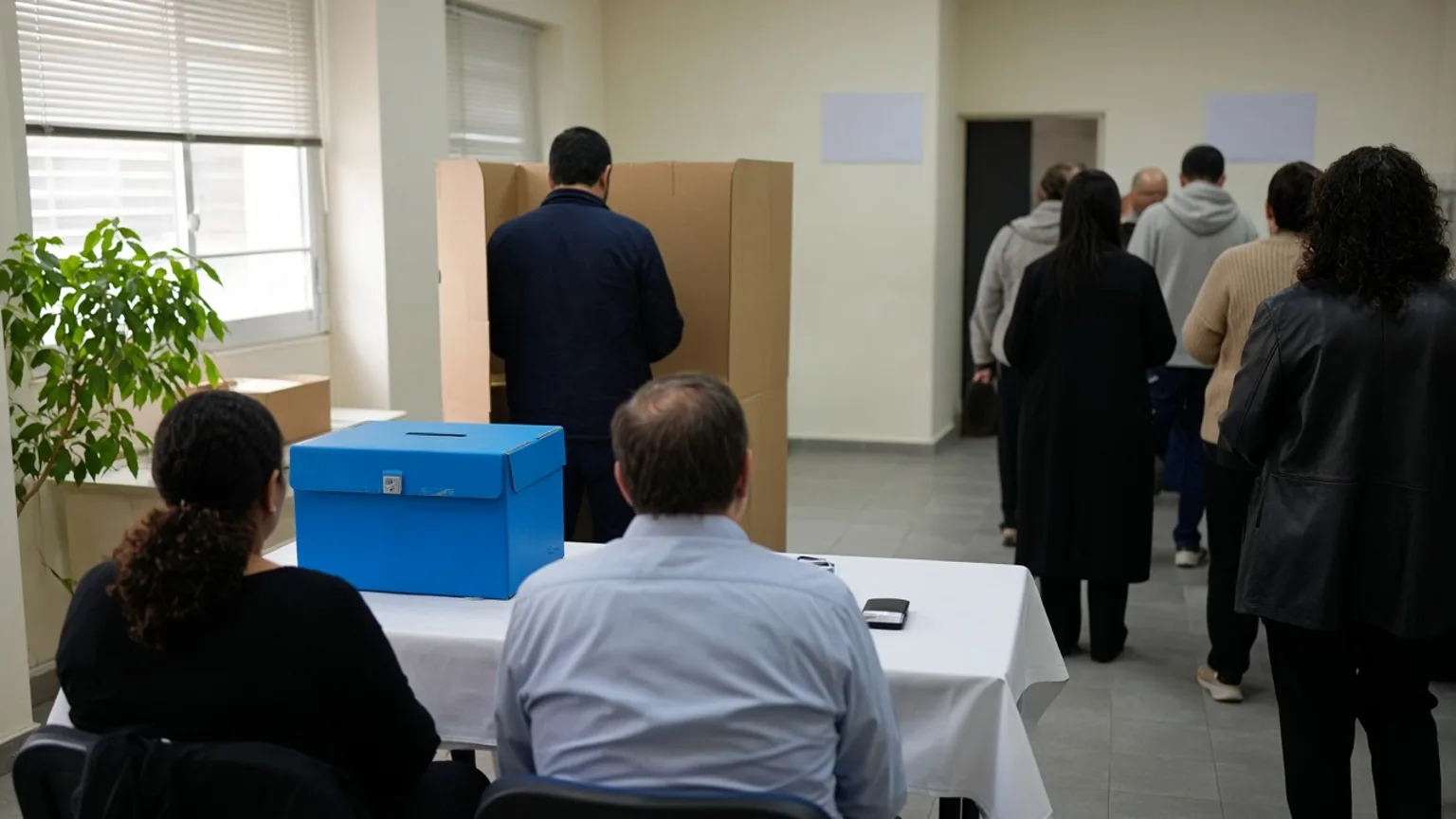
Exit polls leave rival blocs short of 61 seats
Israeli Prime Minister Benjamin Netanyahu claimed victory in the country's national election on Wednesday, although neither his bloc nor the opposition secured a parliamentary majority. About 600,000 absentee ballots were still to be counted following the vote, leaving the final balance of power unresolved.
Exit polls leave rival blocs short of 61 seats
Preliminary exit polls showed rival political camps falling short of the 61 seats required to control Israel's 120-member parliament. Neither Netanyahu nor his principal challenger, Gadi Eisenkot, secured an immediate path to assemble a working majority, setting up prolonged coalition bargaining and clouding the government's approach toward Iran.
Political paralysis injects volatility into energy markets
The parliamentary deadlock matters because an unresolved Israeli administration compounds regional uncertainty precisely as the United States reviews military options against Iran and regional energy infrastructure faces direct attacks. Without a confirmed governing coalition in Jerusalem, allied coordination becomes harder to predict, reinforcing geopolitical risk premiums in energy markets and keeping global investors exposed to sudden disruptions across critical fuel hubs.
Political paralysis injects volatility into energy markets
Crude oil prices climbed on Wednesday as investors weighed the prospect of a prolonged conflict in the Middle East. International benchmark Brent crude futures rose 1% to $115.07 per barrel, while U.S. West Texas Intermediate crude futures gained 1.8% to $101.72 per barrel amid concerns over disruptions to oil supplies.
Trump weighs post-midterm military campaign against Tehran
The domestic stalemate in Israel unfolded as Washington weighed military action across the region. The United States told several Gulf Arab countries to be ready for a short but intense military campaign after the November 3 midterm elections, people briefed on the conversations said. It was also reported that President Donald Trump was considering a short but intense wave of strikes against Iran, although no final decision had been made.
Trump weighs post-midterm military campaign against Tehran
Speaking at a campaign rally in Texas on Tuesday, Trump reiterated that the war with Iran would end on his terms. Trump said the conflict could be brought to a swift conclusion but stressed that any agreement must ensure Iran would never possess a nuclear weapon, following earlier remarks that he was weighing whether to reach a deal with Tehran or pursue further military action.
Cross-border strikes hit regional infrastructure
Regional security conditions grew further strained on Tuesday when Iran-allied Houthi militants said they had attacked Saudi Arabia's Ras Tanura refinery with a ballistic missile. The strike raised worries about disruptions to oil flows, which have kept a geopolitical risk premium embedded in crude prices as traders monitor regional developments.
Cross-border strikes hit regional infrastructure
Cross-border friction also intensified to the north, where Jordan and Syria agreed to form a joint security committee. The bilateral panel was established to examine Jordanian air strikes in southern Syria that killed at least seven people, including civilians, underscoring broader instability while Israel remains locked in post-election paralysis.