Edition · Wed 28 Oct 2026
Commodities Desk
Brent Tops $115 as a Houthi Strike on Ras Tanura Puts the War Premium Back in Oil
Oil prices climbed as Houthi militants claimed a missile strike on Ras Tanura and reports emerged of potential post-midterm U.S. strikes on Iran, lifting Brent crude futures to $115.07 per barrel.
Not investment advice: this article is for information only.
Chanan Zevin - Chief Editor and Head of Desks
Published
Crude futures surge past key thresholds
Crude oil prices climbed on Wednesday as investors assessed the prospect of a prolonged conflict in the Middle East following fresh military warnings and regional attacks. International benchmark Brent crude futures rose 1% to $115.07 per barrel, while Brent crude briefly traded at $115 a barrel. In the United States, West Texas Intermediate crude futures gained 1.8% to $101.72 per barrel, while West Texas Intermediate crude rose 1.9% to $101.78 a barrel.
Crude futures surge past key thresholds
For global financial markets and policymakers, the price surge matters because mounting instability threatens to entrench higher energy costs across consumer economies while destabilizing industrial corporate margins. Persistent concerns over disruptions to oil flows have kept a geopolitical risk premium embedded in crude prices, while Europe's Stoxx 600 fell 0.2% as the rise in crude prices weighed directly on economically sensitive equities.
Ballistic missile targets Ras Tanura
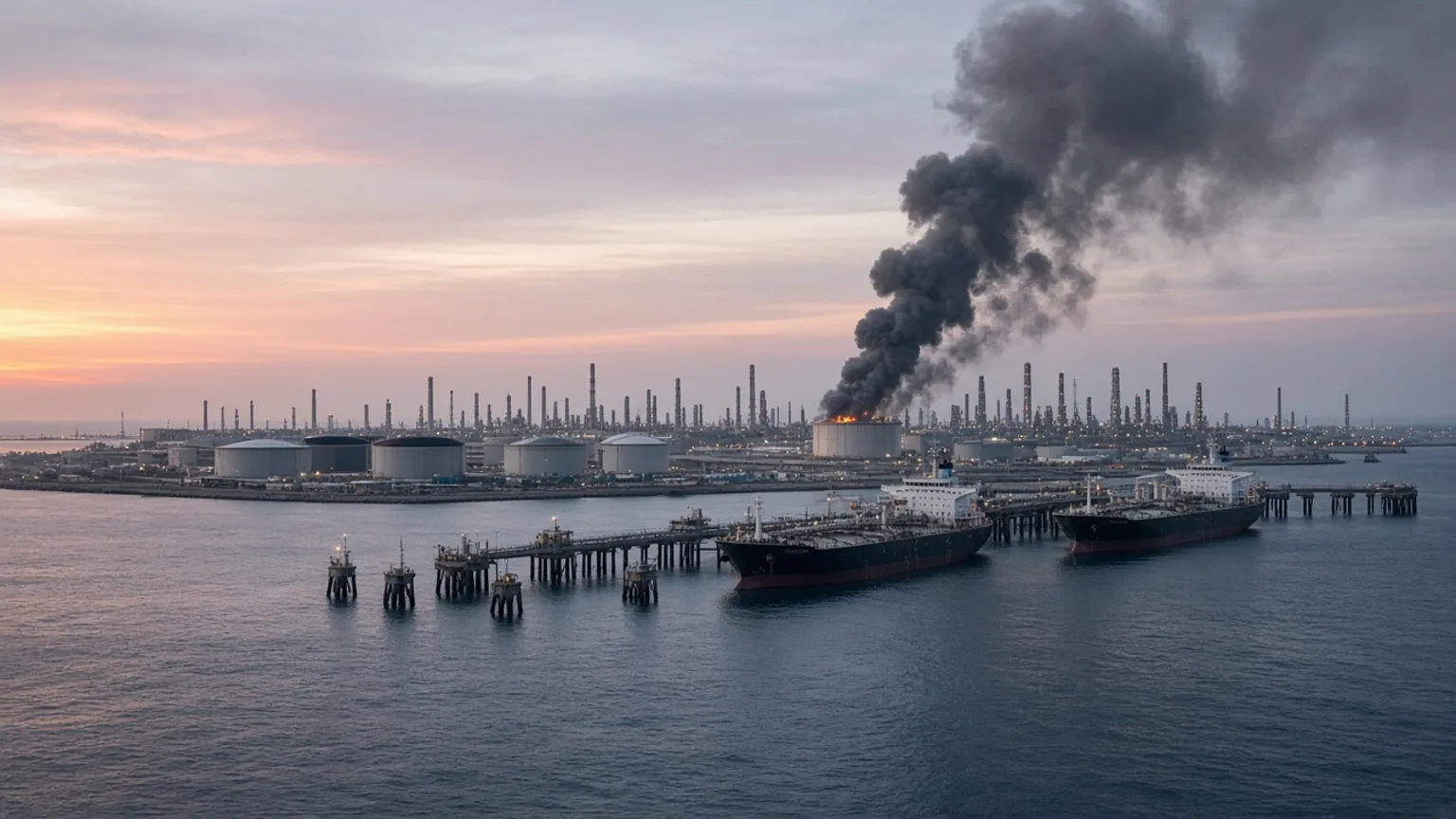
Concerns over direct supply infrastructure intensified after Iran-allied Houthi militants said on Tuesday that they had attacked Saudi Arabia's Ras Tanura refinery with a ballistic missile. The claim exacerbated existing worries across energy trading desks about potential physical disruptions to crude processing hubs across the Persian Gulf.
Ballistic missile targets Ras Tanura
The assault on Saudi refining infrastructure coincided with heightened rhetoric from Washington, where President Donald Trump spoke at a campaign rally in Texas on Tuesday. Trump said the conflict could be brought to a swift conclusion but stressed that any agreement must ensure Iran would never possess a nuclear weapon, reiterating his position that the war with Iran would end on his terms.
Washington prepares post-midterm military options
Geopolitical risks expanded after people briefed on the discussions said that the United States has told several Gulf Arab countries to be ready for a short but intense military campaign after the midterm elections. That planning followed earlier remarks from Trump indicating he was weighing whether to reach a deal with Tehran or pursue further military action.
Washington prepares post-midterm military options
Broader financial markets tracked the energy escalation alongside macroeconomic events, with the Federal Reserve holding an interest-rate policy meeting on Wednesday. Chairman Kevin Warsh faced scrutiny over policy settings after policymakers raised rates during the prior month, while the yield on 10-year Treasuries stood little changed at 4.99%.
Israeli election impasse deepens Middle East uncertainty
Regional instability was compounded by political friction in Israel, where preliminary exit polls showed rival factions falling short of the 61 seats required to command the 120-member parliament. The outcome pointed toward an intractable political stalemate, leaving neither Prime Minister Benjamin Netanyahu nor challenger Gadi Eisenkot with a defined route to a majority.
Israeli election impasse deepens Middle East uncertainty
The prospect of drawn-out coalition negotiations has clouded the outlook for Israel's strategic posture toward Iran, cementing expectations among traders that regional hostilities will linger without a prompt diplomatic resolution.