Thursday Edition · Thu 22 Oct 2026
Brent Hits a Five-Month High Near $113 as Houthi Strikes and Iran War Plans Outweigh Strong Gulf Exports
Brent crude rose almost 3% on Thursday to its highest level since May after deadly attacks in Saudi Arabia and a report that the US and Israel are planning renewed strikes on Iran. US crude briefly broke $100 a barrel.
Not investment advice: this article is for information only.
Chanan Zevin - Chief Editor and Head of Desks
Published
The move
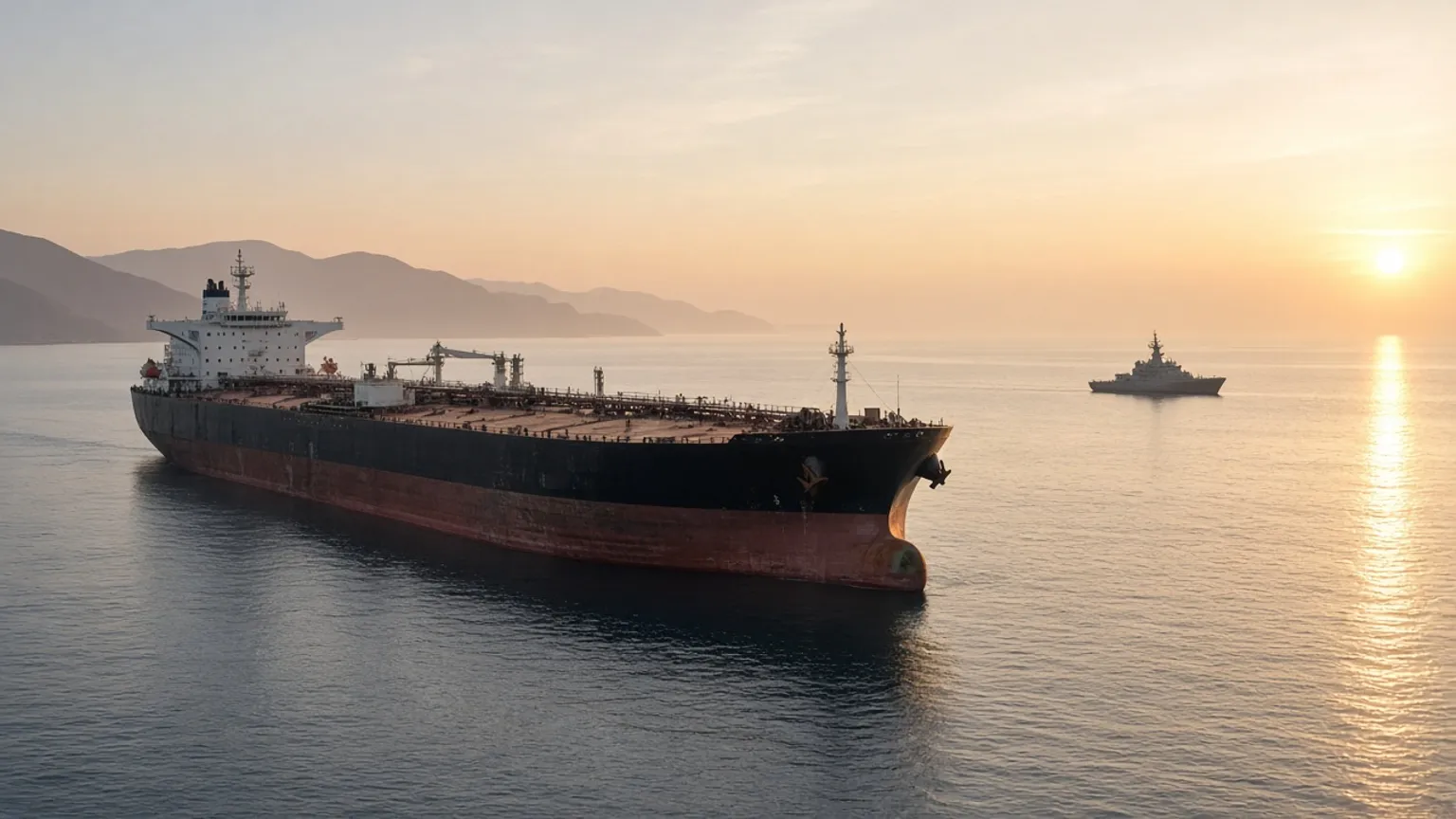
Brent crude futures climbed $3.19, or 2.9%, to $112.01 a barrel by 13:11 GMT on Thursday, Reuters reported. Earlier in the session Brent touched $112.68, the highest since 18 May. US West Texas Intermediate gained $2.41, or 2.5%, to $99.56 after trading as high as $100.09. CNBC reported Brent at $111.81 later in the morning in New York after it had nearly reached $113. The rally came after Brent settled largely unchanged on Wednesday, so almost all of the move happened in a single session.
The weekly path
The rise did not come from nowhere. A London-listed Brent tracker, the WisdomTree Brent Crude Oil fund, closed at 105.86 on 16 October, 107.83 on 19 October, 107.28 on 20 October and 107.56 on 21 October, according to Stooq data, before trading at 110.29 on Thursday afternoon. Chart 1 shows that path. The fund tracks futures rather than the spot price, so its levels differ from Brent itself, but the direction is the same: a slow grind higher followed by a jump on Thursday.
Attacks in Saudi Arabia
The immediate trigger was a series of Houthi attacks in Saudi Arabia. Drone strikes on Aramco's Shaybah oil field and on King Fahd International Airport in Dammam killed three people on Wednesday, according to Bloomberg. The Saudi energy ministry said Shaybah's output was unaffected. RTE reported that Saudi Aramco told staff to evacuate its Dhahran headquarters and work remotely, citing sources. The United States ordered non-emergency diplomats and their families to leave the kingdom, which Reuters said added to the sense of escalation.
War plans on Iran
A second driver was political. The New York Times reported that US and Israeli military planners have drawn up specific plans for renewed strikes on Iran after next month's midterm elections, according to CNBC. President Donald Trump said something would happen on Iran "fairly soon". Tamas Varga of PVM Oil told Reuters that no de-escalation is expected until the midterms, which should keep prices elevated. Traders are therefore pricing not only current disruption but also the chance of a new round of direct conflict.
Hormuz and the northern Gulf
Shipping in the Gulf remains under pressure. Iran's Revolutionary Guards navy said four vessels involved in what it called illegal oil transfers in the northern Gulf were hit and caught fire on Wednesday, and that three more vessels struck mines west of the Strait of Hormuz, Reuters reported. These claims have not been independently verified. Iran's foreign minister has said the strait will not be fully open until an agreement with Washington is reached. Any attack on ships raises insurance and freight costs even when volumes keep moving.
Exports are still flowing
The bearish side of the story is that oil is still getting out. Morgan Stanley estimated Middle East crude exports at about 17 million barrels a day last week, Reuters reported. Varga said reports of exports above pre-conflict levels are being outweighed by the attacks. That tension explains the market's nervousness. Physical supply looks adequate for now, but the system has little margin if a major facility is hit and stays offline.
US inventories
US data added a little support. The Energy Information Administration said crude stocks fell by 3.06 million barrels to 412.5 million barrels last week, Reuters reported. Analysts had expected a draw of only 820,000 barrels. Distillate stocks, which include diesel and heating oil, rose 1.68 million barrels to 104.3 million, against expectations of a decline. The crude draw points to firm refinery demand. The distillate build is a reminder that diesel supply is not as tight as the headlines might suggest.
Libya adds to the picture
Supply news from outside the Gulf also leaned bullish. The head of Libya's National Oil Corporation told Reuters that a valve on a pipeline from the Hamada and Tahara fields to Zawiya port had been shut, reducing output at both fields. Libyan disruptions are frequent and often short. On a day when the market was already focused on the Middle East, however, even a modest outage reinforced the upward move.
The wider market
Higher oil fed directly into other markets. Yahoo Finance reported that oil's surge to a five-month high came as US stocks fell and Treasury yields declined as investors moved into bonds. Energy prices also matter for central banks. FXStreet noted that traders expect the Federal Reserve and the European Central Bank to hold rates at their October meetings but still see the risk of further hikes because of energy-driven inflation. Oil at these levels keeps that debate alive.
Reading the risk
For producers and consumers the question is duration. A spike driven by fear can fade quickly if strikes stop and shipments continue. A spike driven by real damage to facilities lasts longer. So far the confirmed damage in Saudi Arabia is limited, and exports remain strong. The market is paying for the possibility of something larger. That premium can disappear fast, which is why volatility rather than direction is the safer forecast for the coming week.
Why $100 matters for WTI
WTI's brief move above $100 a barrel is a psychological line rather than an economic one. It matters because it shapes headlines, political pressure and the behaviour of traders who use round numbers as reference points. US gasoline and diesel prices follow crude with a lag, so a sustained move above $100 would reach American drivers in the weeks before and after the midterm elections. That timing gives the oil price a political weight that goes beyond its direct effect on the economy.
The diesel question
Diesel has been at the centre of energy politics this autumn. Earlier editions of the Journal reported on Washington's efforts to contain pump prices, including debate over Russian diesel. Thursday's EIA data showed distillate inventories rising to 104.3 million barrels, which gives some relief. But distillate markets are sensitive to disruption in the Middle East, which is a large exporter of refined products. If Gulf refineries or terminals were hit, diesel would likely react more sharply than crude.
Who benefits
Higher prices are not bad for everyone. Producers outside the conflict zone, including US shale companies, earn more for each barrel they sell. Lockheed Martin's shares rose 9.4% on Thursday after it raised its forecasts, Reuters reported, a reminder that defence companies also gain from the regional tension. Consumers, airlines and energy-intensive industries pay the cost. For oil-importing economies in Europe and Asia, a sustained rise in crude adds to inflation at a time when central banks are already worried about prices.
Central banks are watching
The Federal Reserve meets next week, and traders widely expect it to hold rates, according to FXStreet. Reuters noted that weekly US jobless claims fell unexpectedly, which supports that view. But energy prices feed into headline inflation, and higher oil makes it harder for any central bank to signal easier policy. In Europe, where French bond yields have climbed above 5%, an oil shock would add to an already difficult mix of weak confidence and fiscal strain.
Natural gas follows
Oil is not the only fuel under pressure. CaixaBank Research reported that European natural gas prices shot up after reported attacks around Hormuz and with storage levels low. Europe imports liquefied natural gas from Qatar through the strait, so any threat to shipping there affects gas as well as crude. As winter approaches, the combination of low storage and Gulf risk leaves European buyers exposed.
Thursday's intraday swings
The size of the intraday range is itself informative. Brent traded between roughly $110 early in the Asian session, according to Reuters, and nearly $113 later in the day. A range of almost $3 in one session shows how quickly traders are reacting to each new headline from Saudi Arabia, Iran and Washington. Such swings make hedging more expensive for airlines, shippers and refiners.
What to watch
Traders will watch for any Saudi statement on Aramco operations, for further Houthi claims, and for signals from Washington about Iran before the 3 November midterms. Next week's EIA data and any comment from OPEC+ on spare capacity will also matter. The Journal will report settlement prices and confirmed supply data, and will not treat a single session as a new trend.
Sources
- Reuters via Yahoo Finance, Brent hits five-month high on escalating Middle East conflict, 22 Oct 2026 · finance.yahoo.com
- RTE, Brent at 5 month high on escalating Middle East conflict, 22 Oct 2026 · rte.ie
- Reuters via Investing.com, Oil rises as US orders diplomats to leave Saudi Arabia, 22 Oct 2026 · au.investing.com
- CNBC, Oil prices today, 22 Oct 2026 · cnbc.com
- Stooq, WisdomTree Brent Crude Oil (BRNT.UK) historical data, 22 Oct 2026 · stooq.com
- Bloomberg via The Straits Times, attacks on Aramco oil field and Saudi airport, 22 Oct 2026 · straitstimes.com
- Yahoo Finance, Stock market today, 22 Oct 2026 · finance.yahoo.com
- FXStreet, Euro retreats as US Dollar regains ground, 22 Oct 2026 · fxstreet.com
- Reuters via Devdiscourse, Nasdaq leads Wall Street lower on AI spending jitters, 22 Oct 2026 · devdiscourse.com
- CaixaBank Research, Financial Markets Daily Report, 22 Oct 2026 · caixabankresearch.com
Related
- Houthi Drones Kill Three at Saudi Oil Field and Dammam Airport as US Orders Staff Out of the Kingdom
- France's 10-Year Yield Holds Above 5% for the First Time Since 2002 as Treasuries Rally on a Flight to Safety
- Nasdaq Slides Up to 2.2% as Meta's New Non-Voting Shares and Tesla's Spending Plans Revive AI Cost Fears