Trump Puts Intelligence Chief in Charge of New "Super Intelligence Force"
President Trump has appointed Director of National Intelligence Jay Clayton to lead the newly announced 'Super Intelligence Force,' a federal AI task force whose scope and powers remain undefined.
Chanan Zevin — Chief Editor and Head of Desks
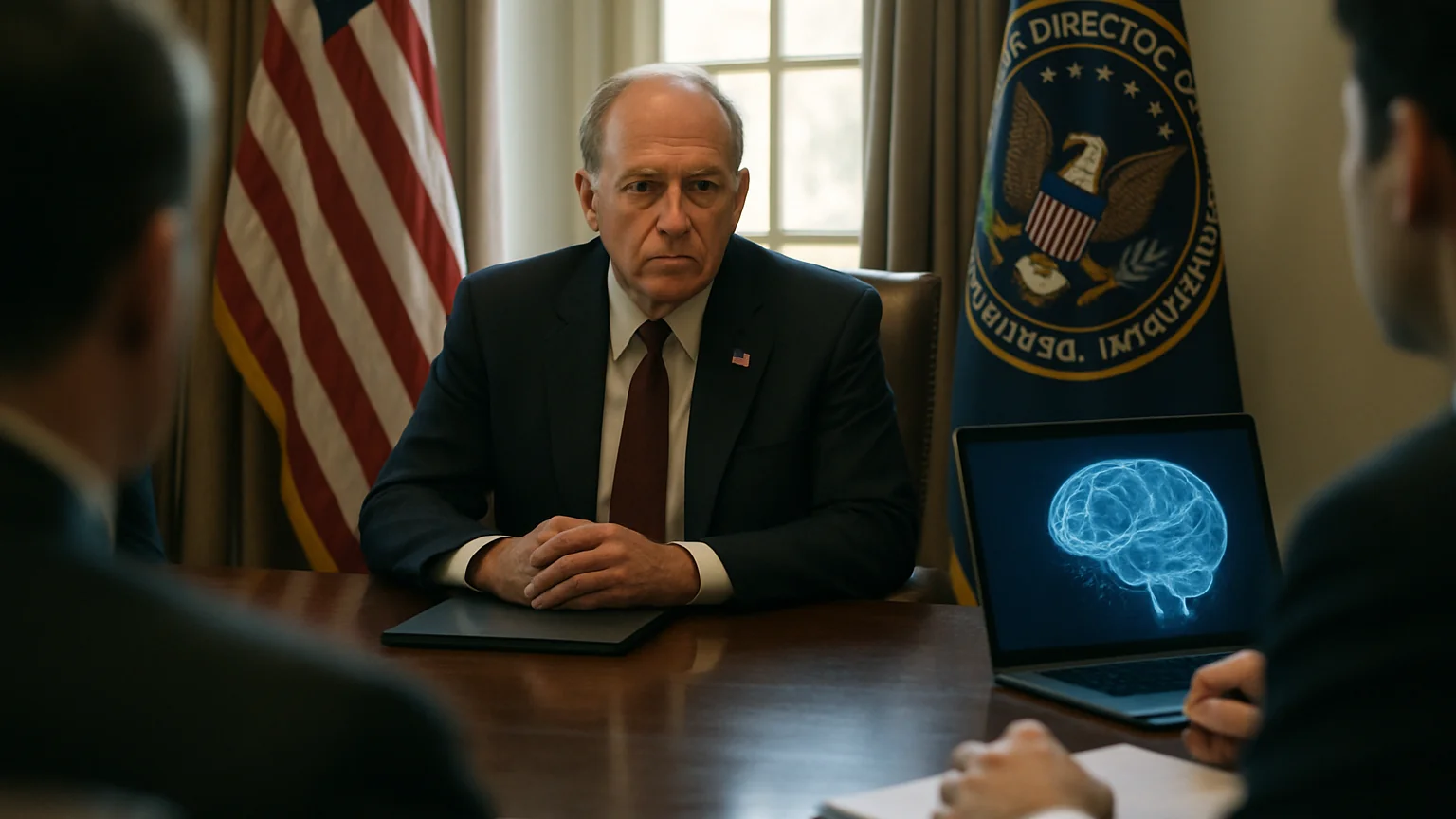
Leadership and Structure of the Super Intelligence Force
President Donald Trump has formally announced the creation of the 'Super Intelligence Force,' a federal task force intended to coordinate the United States' efforts in artificial intelligence. The group will be led by Director of National Intelligence Jay Clayton, who is expected to serve as the White House's new AI czar. Clayton will share leadership with Federal Trade Commission Chairman Andrew Ferguson, Under Secretary of Defense for Research and Engineering Emil Michael, and Office of Personnel Management Director Scott Kupor. [S1]
Clayton, formerly the chair of the Securities and Exchange Commission and US Attorney for the Southern District of New York, brings a background in regulatory oversight and risk management to the role. His appointment signals an intent to blend national security, regulatory, and technical expertise within the task force's leadership. [S2]
The group’s composition reflects a cross-agency approach, drawing from intelligence, regulatory, defense, and personnel management sectors. Clayton has expressed confidence in the team, emphasizing their 'diverse skill sets' and a shared commitment to ensuring that the United States maintains a leading position in artificial intelligence development. [S1]
Mandate and Powers: What Is Known
The announcement of the Super Intelligence Force was notably sparse on details regarding its specific mandate or powers. President Trump stated that the task force is charged with coordinating federal efforts to ensure American leadership in 'Super Intelligence,' but did not outline concrete actions or oversight mechanisms. [S1]
This analysis reflects the published evidence available for this edition. He noted that the task force would examine existing law and discuss possible actions Congress could take, but no legislative proposals or regulatory frameworks have been specified. [S1]
At this stage, the sources do not specify any enforcement powers, regulatory authority, or defined scope for the task force. The lack of detail has left open questions about how the Super Intelligence Force will interact with industry, set standards, or address public concerns about AI risks. [S1]
Relationship to the AI Industry 'Constitution'
The formal announcement of the task force follows a recent meeting between President Trump and top technology CEOs, during which a 'constitution' was signed with six AI companies. This document is intended to establish standards for self-policing within the industry. [S1]
While the existence of the 'constitution' suggests an initial framework for industry cooperation, it is not clear from the sources how the Super Intelligence Force will enforce or oversee adherence to these standards. The sources do not provide details about the contents of the 'constitution' or the mechanisms for its implementation. [S1]
Clayton has suggested that mechanisms for oversight and engagement will be developed in dialogue with stakeholders, similar to how other industries have coordinated with federal agencies. However, the relationship between the task force and the industry 'constitution' remains undefined in the available information. [S1]
Broader Context and Industry Response
The creation of the Super Intelligence Force comes amid heightened concern about the risks and opportunities associated with artificial intelligence. Some technology CEOs have called for increased federal regulation, reflecting a broader debate about how best to balance innovation with public safety. [S1]
Clayton has echoed the administration's view that global dominance in AI is critical to national security, arguing that 'the risk of not being first is high.' He believes that being at the forefront of AI development will better position the United States to address both identified and unidentified risks, particularly those posed by adversaries. [S1]
Industry reaction to the announcement has not been detailed in the sources. The sources do not specify whether the task force or the 'constitution' has received public endorsements or criticism from major AI companies or advocacy groups. [S1]
Next Steps and Unanswered Questions
As of now, the White House has not provided additional information about the objectives or structure of the Super Intelligence Force. An ABC News request for clarification did not receive an immediate response, and no further public statements have been made. [S1]
Clayton has indicated that the task force will develop its approach through ongoing dialogue with stakeholders, including consumers, public interest groups, religious organizations, critical infrastructure providers, and AI companies. However, the specifics of these engagements remain to be determined. [S1]
The sources do not specify a timeline for the task force's activities, nor do they outline any immediate policy changes or regulatory actions. As a result, the scope, powers, and impact of the Super Intelligence Force remain largely undefined at this stage. [S1]