Spain's Sánchez Calls Snap Election for November 29 After Housing Defeat
Prime Minister Pedro Sánchez has called a snap general election for November 29 following the defeat of key housing decrees and widespread protests across Spain.
Chanan Zevin — Chief Editor and Head of Desks
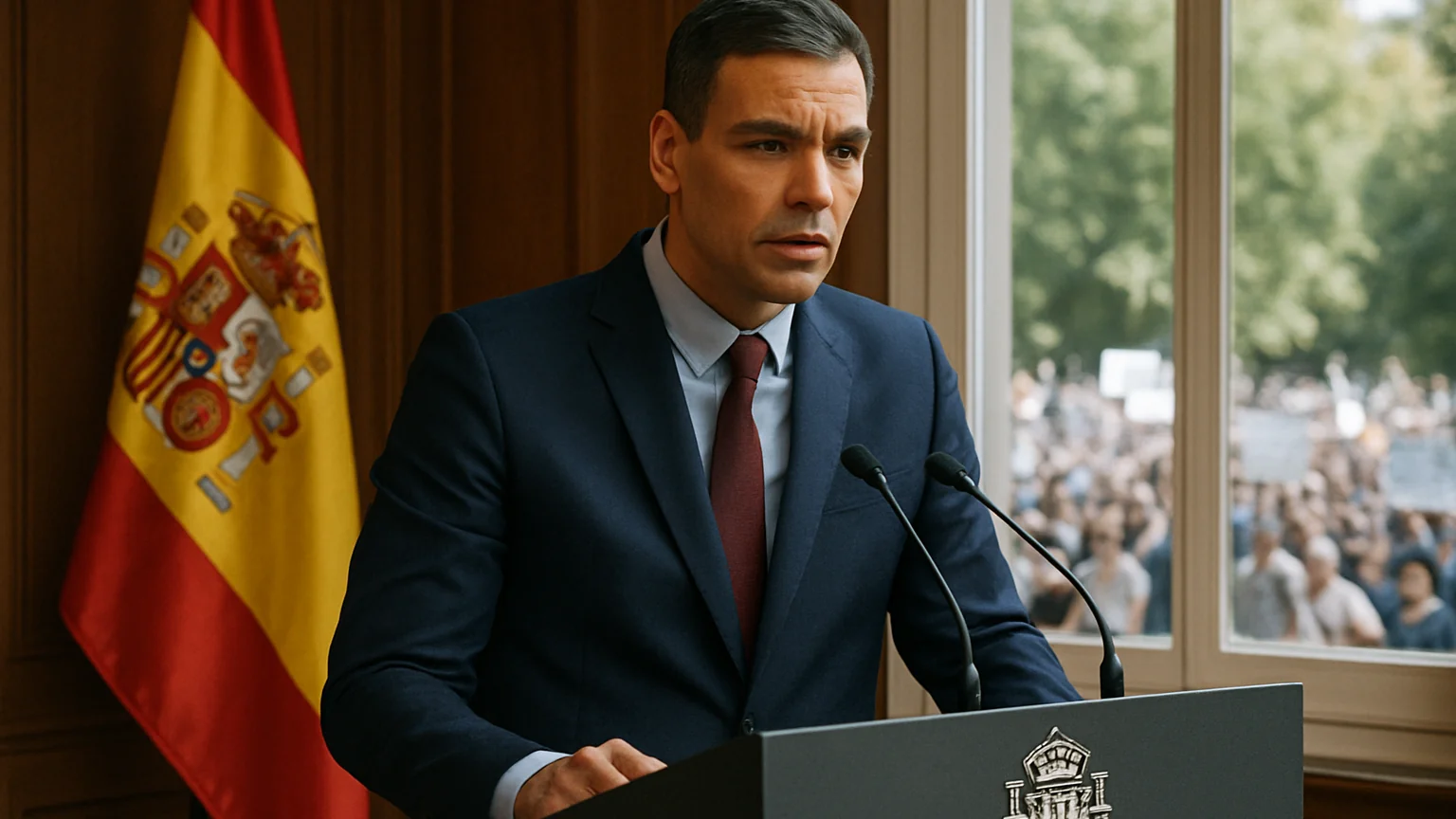
Snap Election Announced Amid Political Turmoil
Spanish Prime Minister Pedro Sánchez announced a snap general election for November 29 in an institutional address from La Moncloa, the seat of government. This decision comes nine months before the scheduled end of the legislative term, marking a significant shift from Sánchez’s previous intention to complete his mandate. The announcement followed extensive consultations with cabinet members and party leaders. [S1]
Sánchez acknowledged shortcomings in his government’s performance, citing mistakes and unaccomplished goals. He emphasized the challenges faced during his tenure, including navigating a confrontational Congress and dealing with powerful unelected elites. Despite these difficulties, Sánchez highlighted Spain’s economic growth and improvements in social services as achievements of his administration. [S1]
The prime minister stated that further progress, particularly in public services and housing, would require broader parliamentary support. He explained that the decision to dissolve Parliament was made after informing the King and convening an extraordinary Cabinet meeting. Sánchez concluded by referencing the complex international environment and the need for renewed public support. [S1]
Housing Crisis and Defeated Decrees
The immediate catalyst for the snap election was the defeat of two housing decrees in Congress, which were designed to strengthen protections for tenants. These measures were rejected after Junts per Catalunya joined the Popular Party (PP) and Vox in opposition, despite prior negotiations with the government. [S1]
The rejection of the housing decrees underscored Sánchez’s lack of a stable parliamentary majority, making it increasingly difficult to pass significant legislation. This legislative setback also derailed plans to present the first full budget of the legislature, which had been intended as a demonstration of willingness to negotiate with other parliamentary groups. [S1]
Sánchez’s inability to secure support for his housing agenda highlighted broader challenges in addressing Spain’s chronic shortage of affordable housing. The government’s failure to advance these policies contributed to mounting public frustration and ultimately played a decisive role in the decision to call early elections. [S1]
Nationwide Protests and Public Sentiment
The housing crisis reached a tipping point following the eviction of 87-year-old Maricarmen Abascal from her Madrid home, an event that galvanized public anger over rising rents and evictions. In response, demonstrations spread to more than 50 cities, including Barcelona, Valencia, Seville, and Málaga. [S1]
Tens of thousands of people participated in the protests, with activists establishing camps in central Madrid. The scale and intensity of the demonstrations drew comparisons to the 15-M anti-austerity movement, reflecting widespread discontent with the government’s handling of housing issues. [S1]
Within the Spanish Socialist Party (PSOE), the shift in public sentiment following the protests is viewed as an opportunity to contest the election under more favorable conditions. However, the sources do not specify detailed polling figures or the precise impact of the protests on voter intentions. [S1]
Political Landscape and Electoral Prospects
The upcoming election will take place in a fragmented political landscape. The space to the left of the PSOE, previously decisive in preventing a right-wing victory in 2023, is currently weakened. The alliance formerly known as Sumar, soon to be renamed the Broad Front, lacks a candidate, and a split with Podemos could result in two separate tickets. [S1]
On the right, both the PP and Vox are buoyed by the government’s political damage from the Ceuta migration crisis. Euphoria prevails among their supporters, but the sources note that a struggle over the balance of power is likely if they secure a parliamentary majority. [S1]
Over the past three years, the PP has remained at around 30% of the vote, similar to its 2023 performance, while Vox has recorded significant growth. However, the sources do not provide specific polling data or projections for the upcoming election. [S1]
Implications for Eurozone Political Risk
The snap election in Spain introduces a new element of political uncertainty within the eurozone. The government’s inability to pass key legislation and the widespread protests highlight the volatility of the current political environment. [S1]
Sánchez’s administration has faced a series of crises, including judicial investigations and the Ceuta migration episode, which have eroded credibility and complicated efforts to maintain stability. The sources do not specify the direct impact of these developments on financial markets or the IBEX index. [S1]
As Spain prepares for the November 29 election, investors and policymakers across the eurozone will be monitoring the situation closely. The outcome may influence perceptions of political risk in the region, but the sources do not provide further details on potential eurozone-wide effects. [S1]