Saudi Arabia, Türkiye and Pakistan Activate Mecca Defence Pact
Forces from Türkiye and Pakistan will deploy to Saudi Arabia after attacks on its holy cities, drawing both a NATO member and a nuclear power into the Iran–Houthi conflict.
Chanan Zevin — Chief Editor and Head of Desks
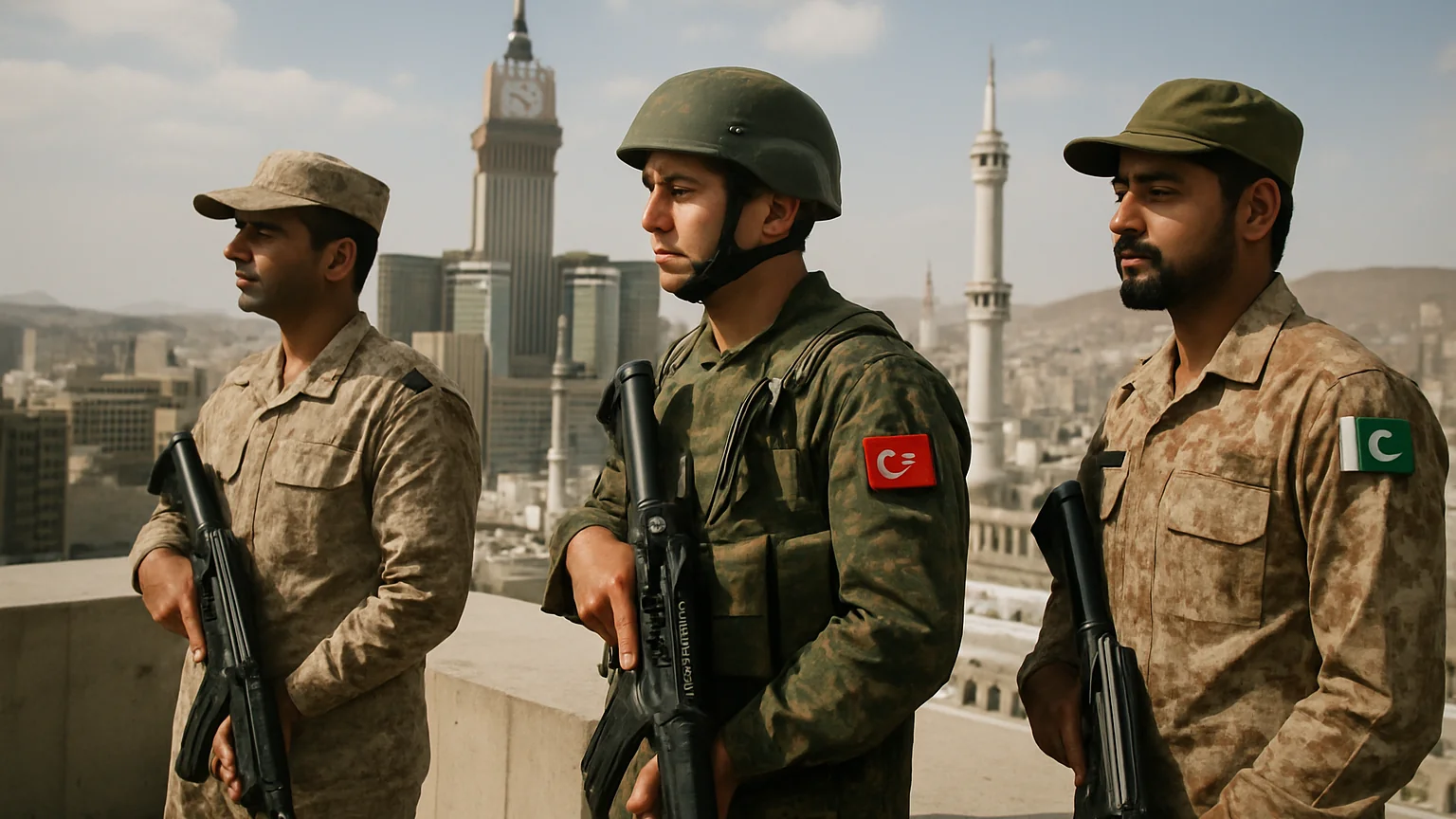
Immediate Activation of the Mecca Defence Pact
Saudi Arabia, Türkiye, and Pakistan have agreed to immediately implement collective defense commitments under the Mecca Defense Alliance, following an emergency meeting in Riyadh to address ongoing threats to the Kingdom. This decision marks a significant step in operationalizing the alliance, which was originally formed by an agreement signed on August 7. [S1]
The emergency meeting of the alliance’s Strategic Political and Defense Committee resulted in a joint statement confirming the rapid deployment of agreed military forces and capabilities to Saudi Arabia. The deployment will proceed according to published arrangements and the national legislation of each member state. [S2]
The alliance’s activation is a direct response to recent attacks targeting Saudi Arabia’s holy cities and other critical sites. The three countries reaffirmed their commitment to collective deterrence and a unified stance against aggressions targeting the Kingdom and its sanctuaries. [S1]
Scope and Structure of the Alliance
The Mecca Defense Alliance aims to enhance the readiness and integration of the militaries of Saudi Arabia, Türkiye, and Pakistan. The committee reviewed political and military consultations and published recommendations affirming the alliance’s commitment to collective defense and a unified response to threats. [S1]
As part of establishing the alliance’s institutional structure, retired Lt. Gen. Numan Mahmud of Pakistan was appointed as the first secretary-general for a three-year term. This appointment is intended to advance the alliance’s objectives and ensure effective coordination among member states. [S1]
The alliance’s framework emphasizes that the security of each member state is an indivisible part of their collective security. Translating the agreement into practical measures is expected to strengthen deterrence and demonstrate the credibility of the alliance’s commitments. [S2]
Risks of Escalation with Iran and the Houthis
The activation of the Mecca Defense Pact comes amid heightened tensions with Iran and its proxies, particularly the Houthis. The alliance condemned attempts to target Mecca and Medina, as well as ongoing attacks on Saudi cities, civilian facilities, and economic installations. [S1]
While the sources confirm the alliance’s intention to deter further attacks, they do not specify the scale or composition of the forces to be deployed, nor do they detail the rules of engagement in the event of further escalation. [S2]
The alliance’s collective deterrence measures are designed to confront not only direct attacks but also those responsible for orchestrating such threats. However, the sources do not provide explicit details on how the alliance will respond to future provocations from Iran or the Houthis. [S1]
Implications for Gulf Energy Security
The ongoing attacks on Saudi Arabia’s cities and economic facilities have raised concerns about the security of the Gulf’s energy infrastructure. The alliance’s activation is intended to reassure both domestic and international stakeholders of the Kingdom’s ability to defend its critical assets. [S1]
The sources do not specify the direct impact of the alliance’s activation on energy markets or infrastructure, nor do they provide figures related to production or supply. However, the emphasis on rapid military deployment and enhanced readiness suggests a focus on safeguarding vital economic interests. [S2]
By strengthening military integration and deterrence, the alliance aims to reduce the risk of successful attacks on key facilities. The sources highlight the commendation of the Saudi Armed Forces’ vigilance and readiness in confronting threats, underscoring the importance of maintaining stability in the region. [S1]
Regional and International Significance
The inclusion of Türkiye, a NATO member, and Pakistan, a nuclear-armed state, in the Mecca Defense Alliance signals a notable shift in the regional security landscape. Their involvement deepens the alliance’s capacity to respond to threats and enhances its deterrent effect. [S2]
The alliance’s activation demonstrates the unity and determination of the three countries to defend their security, sovereignty, and territorial integrity. This collective stance is intended to send a clear message to adversaries about the seriousness of their commitments. [S2]
While the sources do not elaborate on the potential responses from other regional actors, the alliance’s actions are likely to be closely monitored. The practical implementation of the pact underscores the evolving dynamics of security cooperation in the Gulf and the broader Middle East. [S1]