S&P 500 Notches First Record Close in Two Months as Big Tech Leads
The S&P 500 closed at a record high for the first time since August, led by gains in technology and chipmakers, as easing Treasury yields supported a broad-based rally.
Chanan Zevin - Chief Editor and Head of Desks
Record Highs Return to U.S. Equities
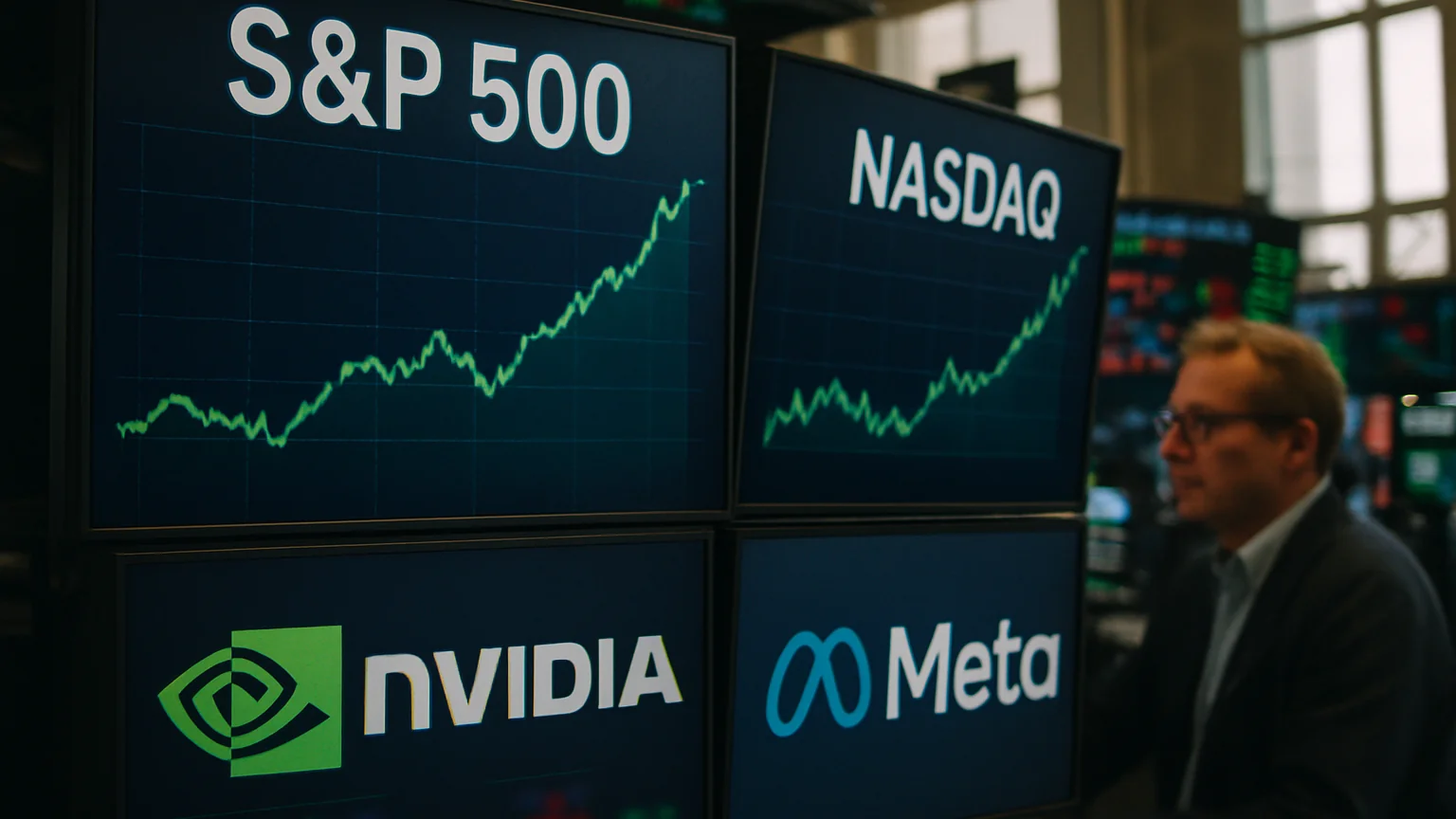
The S&P 500 achieved a fresh all-time intraday high on Tuesday, closing at 7,818.93, a gain of 0.58% for the session. This marked the index’s first record close since August 13, signaling renewed strength in the U.S. equity market after a period of sideways trading. The Nasdaq Composite also finished at a record, closing at 27,599.79, up 0.45% on the day [S1].
This latest milestone represents the S&P 500’s 28th record close of 2026 and extends its winning streak to four consecutive trading days. Over this period, the index has gained 167.39 points, or 2.19%, the largest four-day point and percentage gain since September 22, 2026. The Dow Jones Industrial Average also participated, rising 253.38 points, or 0.49%, to end at 51,521.28 [S2].
Year-to-date, the S&P 500 is up 14.22%, reflecting a robust recovery from its 52-week low of 6,343.72 reached in March. The index has climbed 23.25% from that low and 16.45% from a year ago, underscoring the resilience of U.S. equities in the face of macroeconomic headwinds [S2].
Megacap Technology Drives the Rally
The resurgence of the so-called 'Magnificent Seven' megacap technology stocks has been central to the S&P 500’s return to record territory. After a period of underperformance earlier in the year, these stocks have staged a comeback, helping to re-energize the bull market and offset the impact of rising bond yields and elevated oil prices [S3].
On Tuesday, Nvidia and Meta Platforms led the group, with Nvidia on track to see its market capitalization climb above $6 trillion for the first time. The combined market capitalization of the Magnificent Seven was set to surpass $25 trillion, according to Dow Jones Market Data. This renewed leadership has been critical as investors sought shelter in large-cap tech amid economic uncertainty [S3].
The rally in megacap technology has coincided with a broader move higher in software and semiconductor stocks. As investors endured a reversal in the AI-fueled momentum trade earlier this year, they have now crowded back into both megacaps and other tech-related names, viewing the sector as best positioned to withstand the effects of higher interest rates [S3].
Chipmakers and Sector Participation
Chipmakers were prominent contributors to Tuesday’s gains. Marvell Technology surged 5.8%, while Advanced Micro Devices rose nearly 3%, reflecting optimism about the sector’s outlook. Broadcom also advanced 3.7%, as investors continued to favor companies tied to the ongoing data-center buildout and artificial intelligence trends [S1].
The semiconductor rally has not been isolated. Software names and other technology-related stocks have also trended higher, indicating a broadening of participation within the sector. This shift marks a departure from earlier in the year, when only a handful of stocks drove market gains [S3].
Beyond technology, the breadth of the rally has improved. On Tuesday, 10 or more of the S&P 500’s 11 sectors were on track to finish in the green for a third straight session, a level of sector participation not seen since December 2023. The number of S&P 500 stocks hitting new 52-week highs also outpaced those at new lows for the first time in about a month [S3].
Easing Treasury Yields Support Equities
A decline in Treasury yields provided additional support for equities. The benchmark 10-year Treasury note yield fell 3 basis points to 5.281%, while the 30-year bond yield was little changed at 5.655%. Both yields had reached levels not seen since 2002 on Monday, but their pullback on Tuesday helped ease pressure on rate-sensitive sectors [S1].
Market participants noted that interest rates are now perceived as being fundamentally where they need to be, reducing immediate concerns about further tightening. This sentiment has allowed investors to look past inflation worries, particularly those related to energy prices, and focus on earnings growth and investment in artificial intelligence [S1].
Despite the improvement in yields, some caution remains. Not all areas of the market have benefited equally, with small-cap stocks underperforming on Tuesday. The Russell 2000 index traded just above the flatline, highlighting the continued sensitivity of certain market segments to interest rate dynamics [S1].
Market Outlook and Investor Sentiment
Looking ahead, traders are focused on the Federal Reserve’s upcoming minutes from its September meeting, which may provide further insight into policymakers’ views on interest rates. The prospect of additional rate hikes remains on the table, according to interest-rate futures markets, but the recent market action suggests investors are increasingly comfortable with the current policy stance [S1][S3].
Investor sentiment has shifted notably over the past two months. After a period of narrow market leadership, there are signs that breadth is returning, with more stocks and sectors participating in the rally. However, some market observers remain concerned about the concentration of gains in a few large-cap names [S3].
While the S&P 500’s return to record highs is a positive signal, the sources do not specify whether this momentum will be sustained. Continued strength in technology and chipmakers, combined with stable or easing yields, will likely be key factors influencing the market’s direction in the weeks ahead [S1][S3].