Google Signs Nuclear Power Deal With Constellation to Feed AI Demand
Google and Constellation have signed a 20-year agreement to add 890 MW of new nuclear capacity to the PJM grid, aiming to meet rising AI-driven data center demand and enhance grid reliability.
Chanan Zevin - Chief Editor and Head of Desks
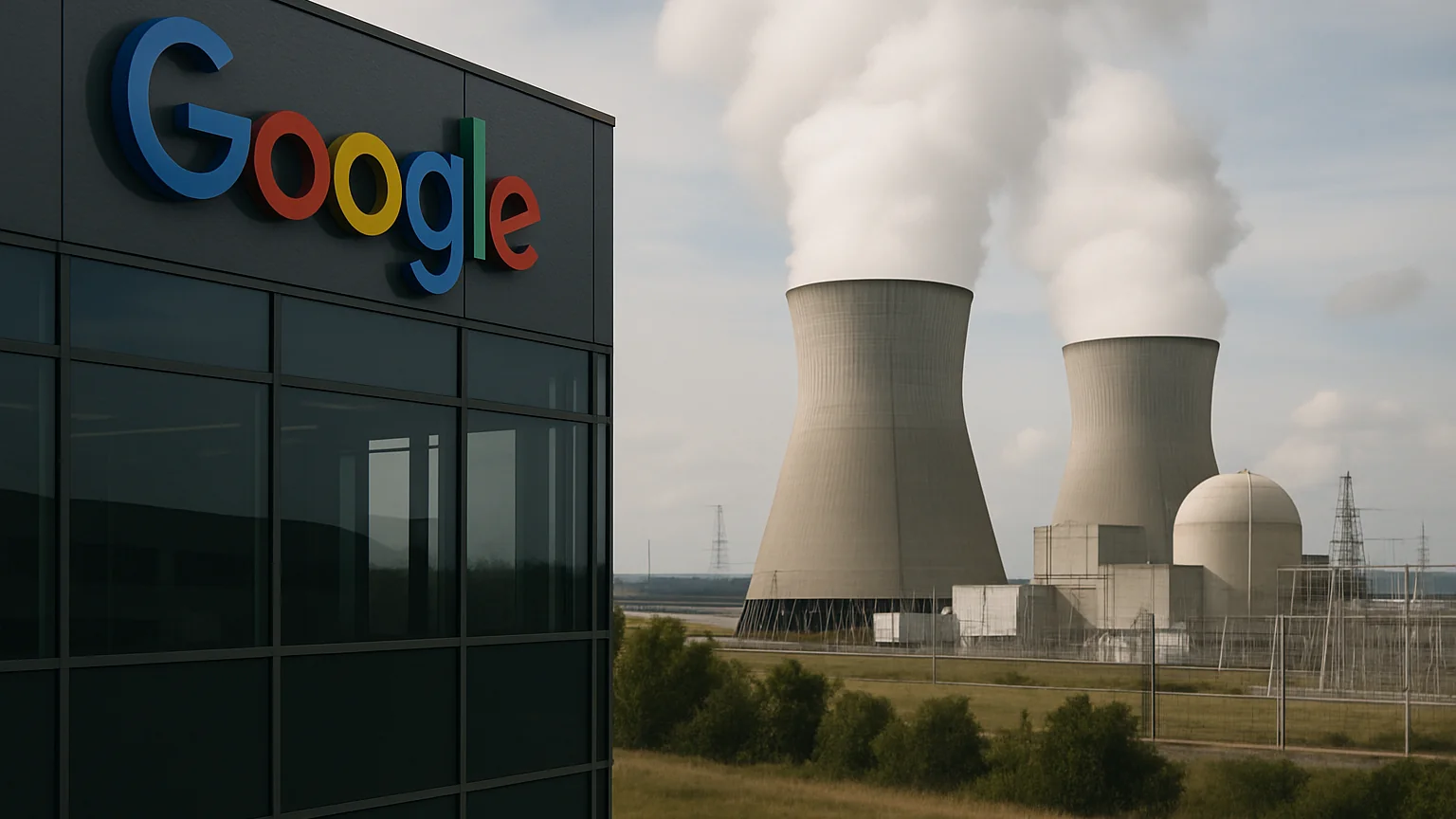
A Landmark Nuclear Power Agreement
Google and Constellation Energy have entered a 20-year power purchase agreement to bring 890 megawatts (MW) of new nuclear capacity to the PJM Interconnection grid, the largest power grid in the United States, serving 67 million people across 13 states and the District of Columbia. This capacity is equivalent to a large new nuclear reactor or several small modular reactors. [S1][S4]
The agreement will fund investments in new equipment and technology at 11 Constellation-owned nuclear units located in Illinois, Pennsylvania, and New Jersey. These upgrades are designed to increase both thermal and electrical efficiency, resulting in additional reliable, firm power for the grid. [S1][S4]
The collaboration aims to address growing electricity demand, particularly from AI-driven data centers, by expanding the total electricity generation available across the PJM footprint. The first uprate is expected to be delivered by 2028, with all projects targeted for completion before the end of 2032. [S1][S2]
Investment, Jobs, and Economic Impact
Constellation’s investment in these nuclear uprates represents more than $4.3 billion, according to both companies. The project is expected to sustain approximately 4,400 existing jobs and create around 7,200 new construction jobs during the building period. [S1][S4]
The agreement is structured to provide revenue certainty for Constellation, ensuring the continued economic viability of its nuclear fleet. This financial stability supports high-skilled union maintenance, engineering, and operations employment across host communities in the Mid-Atlantic and Midwest. [S1]
In addition to the 20-year nuclear capacity deal, Google and Constellation have entered into a separate 15-year energy supply agreement for an additional 2,700 MW in PJM’s fleet. This larger agreement is designed to guarantee continued revenue for other existing power plants, regardless of fuel type, ensuring these assets remain available to the grid. [S1][S3][S4]
Nuclear Uprates: A Practical Approach
Nuclear uprates involve modernizing and upgrading turbines, steam generators, and digital control systems at existing plants. This approach delivers substantial capacity gains without the extended timelines or interconnection challenges associated with new plant construction. [S1][S4]
By leveraging existing infrastructure, the 890 MW of incremental capacity can be deployed more quickly and cost-effectively than building new reactors from the ground up. This is seen as a practical, near-term mechanism to provide firm, clean megawatts to meet increasing electricity demand. [S2][S4]
The initiative directly supports the federal government’s UPRISE program, which encourages public-private collaboration to maximize clean electricity output from existing American nuclear infrastructure. The sources do not specify the precise breakdown of investment per plant or the specific timeline for each uprate beyond the first expected delivery by 2028. [S1][S4]
AI, Google Cloud, and Energy Operations
As part of the expanded five-year technology alliance, Constellation will deploy Google Cloud and Gemini Enterprise to establish an 'AI for Energy' blueprint. This initiative aims to accelerate capacity delivery, optimize asset dispatch, and protect critical infrastructure. [S1]
AI will be used for intelligent site selection, power flow modeling, permitting, and interconnection planning. These applications are expected to shorten engineering and regulatory work, enabling new capacity to reach the grid sooner and at lower cost. [S1]
Additionally, AI-driven asset health monitoring, outage management, and scenario optimization will help maintain plant output and ensure supply keeps pace with rising demand. This analysis reflects the published evidence available for this edition.
Context: Data Centers and Grid Reliability
The agreement is a direct response to the PJM grid’s challenges in meeting surging demand from AI data centers. PJM has faced reliability concerns as data center growth outpaces available supply, raising the risk of blackouts and higher electricity prices in some states. [S3]
Google’s power purchase agreement is structured to add new capacity without passing costs onto residential customers, aligning with the White House Ratepayer Protection Pledge. The sources note that electricity rates in PJM states, such as New Jersey, have increased significantly in recent years. [S1][S3]
By anchoring these nuclear uprate projects, Google aims to support responsible load growth, ensuring that its data center expansion is matched by new, clean, and reliable power supply. The sources do not specify the proportion of Google’s total data center demand that will be met by this agreement. [S1][S3]